Post Last updated on August 20, 2026
Riding with Africa’s Big Five is very safe under expert guidance. Our horseback safaris pair you with professional guides and carefully trained bush horses whose calm presence deters predators. This combination gives you a thrilling yet secure wildlife experience from a unique vantage point.
At a glance:
- Predators like lions rarely see a horse and rider as prey due to the unfamiliar shape and scent.
- Explore our horseback adventures, including options in Kenya’s Masai Mara.
- These safaris are designed for experienced riders comfortable at all paces in open country.
- Your safety is supported by at least two professional guides on every ride.
- Safari horses are born in the bush and undergo years of specific training to remain calm near other animals.
- Horseback riding offers a low-impact way to view wildlife, contributing to conservation efforts.
Why Horseback Safaris in Africa Are Safer Than You Think
Dear safari friends,
As some of you may already know, we have started to curate new safari adventures, especially for those of you who love time in the saddle. As always, we have chosen each safari with care, and every trip feels distinctive.
What is a Big Five Horseback Safari?
We have received many questions and concerns about riding with the Big 5 of African animals. The Big 5 originally described the five most sought-after and dangerous animals to hunt: lion, leopard, African elephant, rhino, and Cape buffalo. Fortunately, few people hunt them anymore, and the term now sits mainly as a shorthand for classic safari wildlife.
Expert Guides Ensure Your Safety on Horseback Safaris
Many people love the idea of a horse riding safari, but worry about riding among wild animals. Questions like “What if lions chase us?” or “Is it dangerous to ride through wild country?” are completely understandable. I had the same concerns before my first horseback safari.
Weighing the Risk from the Saddle
Let me explain why it’s actually very safe:
You’re an experienced rider planning your next solo adventure, and a horseback safari in Kenya catches your eye. The thought of cantering for miles alongside a herd of giraffes is exhilarating, but a question lingers: what about the predators? You hesitate, picturing an encounter with a lion pride.
Then you learn how safari horses, born and raised in the bush, are trained to stand their ground, and that with a human rider, they present an unfamiliar profile that lions typically ignore. Your perception shifts from seeing it as a risk to recognizing it as a deeply immersive and well-managed experience.
Two-Guide Setup
Every safari includes at least two professional guides who are highly experienced. One guide leads the group while another rides at the back for safety.
Reading the Bush
These guides know the bush very well and read small signs of changes in animal behavior. They ensure horses and riders are kept out of unnecessary risk.
Calm Encounter Policy
A horseback safari focuses on experiencing nature calmly, not on close encounters with predators. If your goal is to see big cats up close, a guided game drive is a better option. Safari riders benefit from this measured approach, which prioritizes immersive wildlife observation over risky proximity.
How Safari Horses are Specially Trained for the African Bush
Safari horses are calm, well-trained, and easy to control for experienced riders. Their first instinct when sensing danger is to flee, a trait that has ensured their survival for millennia.
How Horses Balance Calm and Curiosity
Horses are also curious and intelligent animals. Their natural curiosity helps them adapt to unfamiliar sights, sounds, and movements.
Through calm, patient training, horses learn to remain steady around noise, fire, crowds, or even predators. This is why mounted police still use them today in stressful environments.
Born in the Bush
Safari horses receive similar preparation. These African-bred horses are born and raised in the African bush, fully accustomed to its sounds and scents.
Years of Schooling
Young horses train for years alongside experienced ones before joining guests on safari. Only those with the right temperament and confidence are chosen. Their specialized training includes extensive desensitization to ensure they remain calm during horse riding with wildlife, for example, when they meet elephants on open plains or move through dense riverine forests.
Why African Predators Don’t See Horses as Prey
People often assume predators will attack horses, but this is rarely the case. Horses are not the natural prey of African predators. Though related to zebras, horses evolved outside Africa and behave differently.
Not Typical Prey
They also look and smell different, and most importantly, carry humans on their backs. Predators find this combination strange and unfamiliar, so they rarely view horses as prey.
Riders Hold Formation
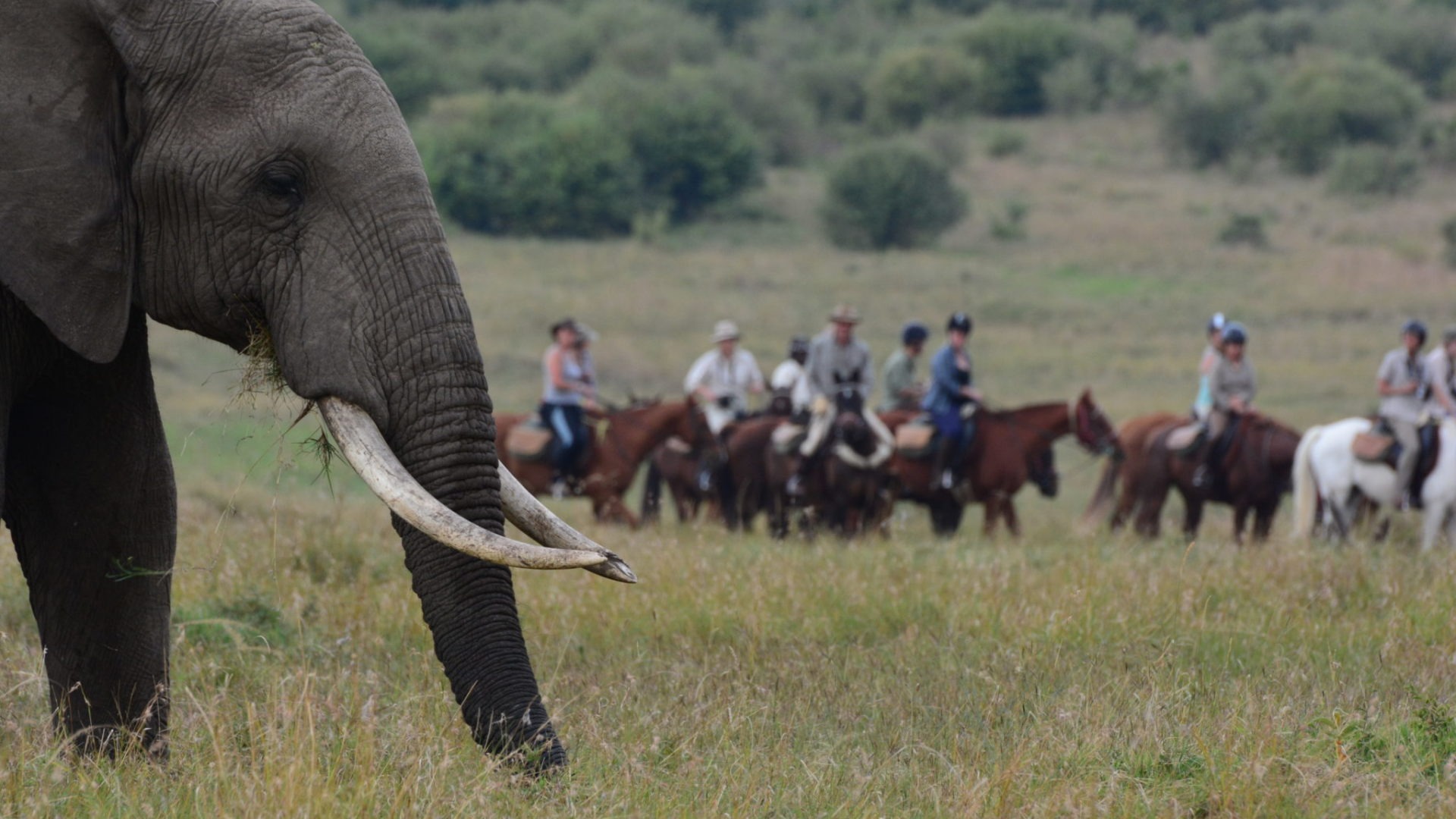
Behavior in the bush also matters. Prey animals usually move in herds and flee when threatened. Riders stay in formation and remain calm, facing predators directly. During encounters with elephants from horseback, this composed approach proves particularly effective.
Don’t Trigger Chase
By not fleeing, they signal strength and control, not weakness. Predators instinctively chase what runs, but ignore what stands its ground. Safari horses are trained to stay calm even when facing lions or elephants. Years of experience make such encounters uneventful for both horse and rider.
Our View on Horseback Safari Safety
We are confident that the best horseback safaris in Africa are very safe when both horses and guides are well-trained. All the African riding safaris we recommend meet this standard, and we work with partners who have long experience in these areas.
You might choose a horseback safari in South Africa or follow channels on a horseback safari in Botswana, and in each case, you can expect varied terrain and memorable wildlife viewing that suits confident, experienced riders.
All the pictures you see here are from Safaris Unlimited. They offer wonderful safaris in Kenya‘s Masai Mara. You can find them on our website.
Common Questions About Horse Safaris
Do I need to be an experienced rider to join a horseback safari?
Many horseback safaris require competent riders who can control a horse at walk, trot, and canter. Introductory lessons and ride assessments are often provided, and tailored options are available for varying experience. See our Horse Riding Safari FAQ for specific trip requirements.
Are there age or weight limits for riding safaris?
Age and weight limits vary by operator and horse. Many camps set minimum ages and recommend maximum rider weights for safety. Contact us with your details, and we will confirm suitability for specific safaris. See our Horseback Set Departures for inspiration.
What level of physical fitness is needed for a horseback safari?
Guests should have moderate fitness and be able to mount, dismount, and ride for multiple hours in varying terrain. Longer or faster rides need stronger stamina. If you have health concerns, we can match you to gentler options. We suggest practicing rides at home before you travel. Details are in our Travel Info.
Can horseback safaris be combined with lodge stays or private charters?
Yes. Riding packages can be combined with lodge nights and private transfers to create a tailored safari. We plan logistics, transfers, and timing to match riding intensity and comfort preferences. For sample combinations and booking steps, see our Horseback Safaris.