Post Last updated on August 28, 2026
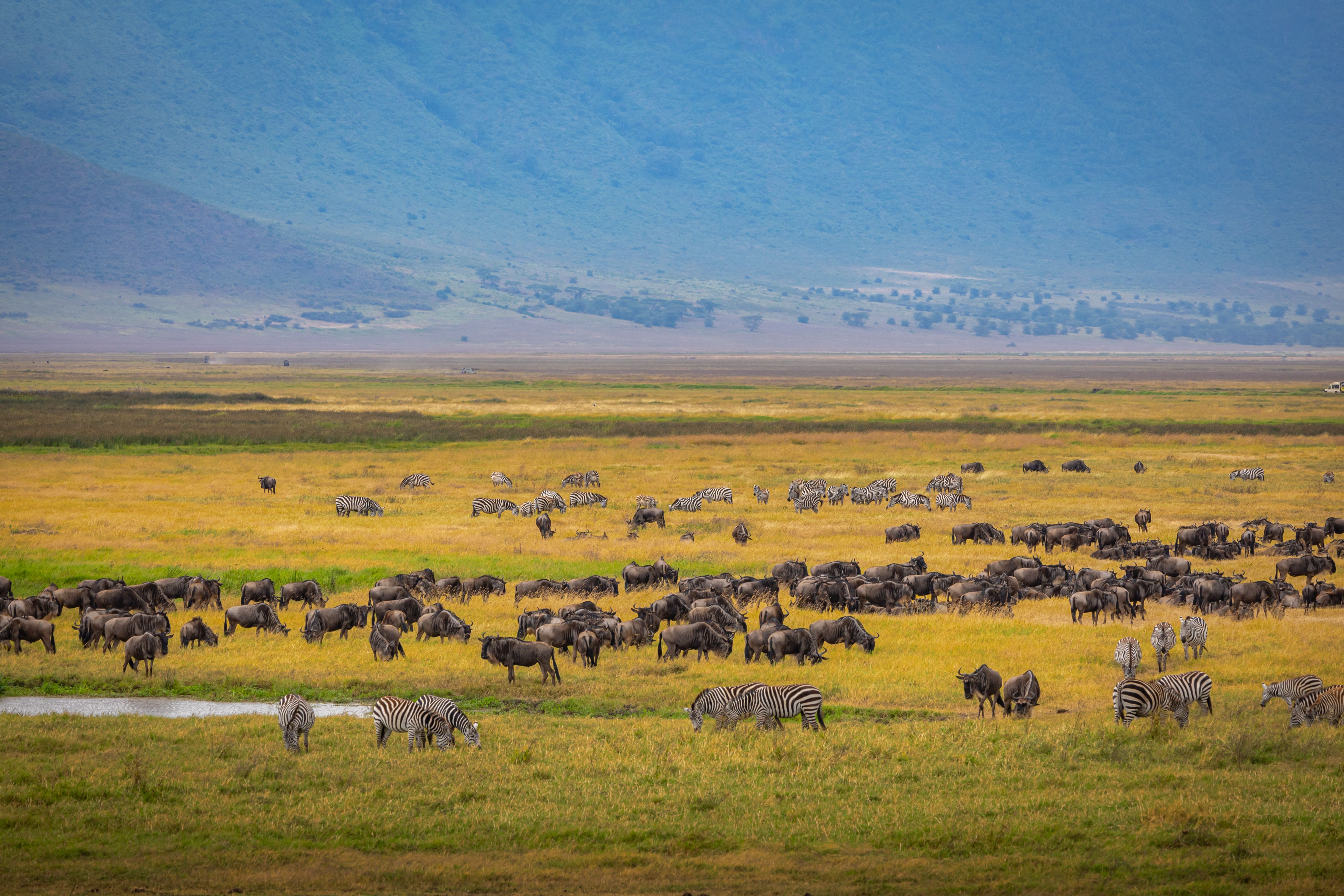
Before the herds come into view, you hear them. Hooves thunder across the Serengeti plains, building into a low roar as thousands of wildebeest press forward through the grass. Zebra move among them, almost lost within the scale of the herd, while dust rises behind them and softens the horizon.
As evening settles over the plains, predators watch from the grass and the herd tightens. You can feel the tension build before the movement surges forward again. In that moment, you realise you are witnessing one of the largest mass movements of animals on the planet.
What is the Great Migration?
The Great Wildebeest Migration is the continuous, year-round movement of around 1.5 million wildebeest through the wider Serengeti-Mara ecosystem in Tanzania and Kenya. Hundreds of thousands of zebra and gazelle move alongside them, while predators track the herds across the plains.
The herds follow a broad circular route rather than one straight path. They travel from the short-grass plains around Ndutu and the Ngorongoro Conservation Area through the central Serengeti and Western Corridor before reaching the northern Serengeti and Kenya’s Masai Mara. When the short rains renew the grass in Tanzania, the movement turns south again.
Rain sets the pace. The herds may remain where grazing holds or move quickly when an area dries. They also spread into different groups, sometimes separated by many kilometres.
When is the Great Migration?
The Great Migration takes place throughout the year. As the herds move through the Serengeti-Mara ecosystem, each stage brings different wildlife activity and shifts the focus to another part of the landscape. This is how a typical year unfolds on the ground.
January to March
Calving on the Southern Plains
At the start of the year, the main herds spread across the short-grass plains of the southern Serengeti and Ndutu, extending into the Ngorongoro Conservation Area. Rain during November and December produces nutrient-rich grazing, giving pregnant females the conditions they need before calving.
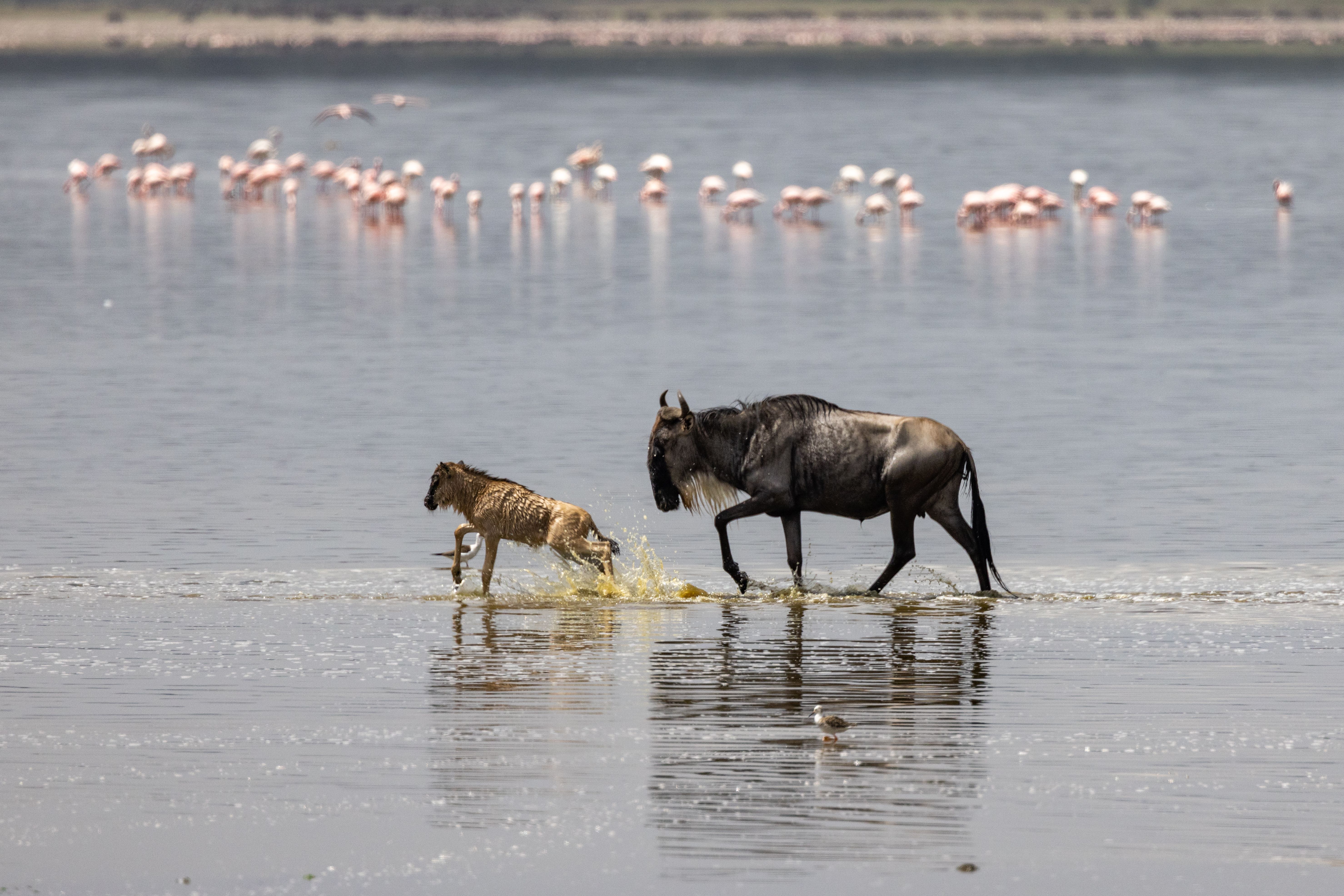
Most calves arrive from late January into March, with February usually the main month. Roughly 500,000 wildebeest calves may be born over several weeks, and newborns can stand within minutes. Their numbers draw lions, cheetahs, spotted hyenas and jackals onto the plains.
By March, the grass begins to dry and some herds start drifting towards the central Serengeti. Others may remain around Ndutu for longer.
April to June
North through Central and Western Serengeti
As the southern plains dry, the wildebeest pass the Moru Kopjes and Seronera before spreading towards the Western Corridor. April and May can bring long rains, making road travel slower while the Serengeti remains green.
The rut usually falls during this northward movement. Bulls defend temporary territories and compete for females as the herds continue across the plains. This is one of the stronger periods for watching wildebeest behaviour and seeing the migration in motion.
From late May into July, parts of the migration reach the Grumeti River system. Crossings here are generally smaller and less concentrated than those at the Mara River.
July to October
Northern Serengeti and the Mara River
By July, the leading herds often reach the northern Serengeti. Groups move between Tanzania and Kenya’s Masai Mara in search of grazing. Many remain in Tanzania, while others cross the Mara River more than once.
There is no set time for a river crossing. Wildebeest may gather along the bank for hours and then move away, while another group may enter the water with little warning. A guide who knows the river can read the movement of the herds and the activity along the bank, but even the best guide cannot predict exactly when a crossing will happen.
July to October is high season, so we are particular about camp position. Northern Serengeti camps provide access to Tanzanian crossing points, while selected Masai Mara properties place you closer to the herds in Kenya. We look closely at driving times and river access, favouring smaller properties that offer greater privacy and a more exclusive safari experience.


November to December
The Return to the South
When the short rains begin, the migration turns through the eastern and central Serengeti towards the southern plains. The herds can travel quickly when fresh grass appears, often passing through Namiri and Seronera before reaching Ndutu.
Some days bring long lines of wildebeest moving across the plains. On others, the herds break into smaller groups over a wide area. By late December, many females are heavily pregnant and begin settling near the calving grounds, ready for the cycle to begin again.
When is the Best Time to Go on a Great Migration Safari?
Every stage of the Great Migration offers something worth seeing, with different months placing you in different parts of the cycle. February is the main month for calving on the southern plains, when newborn wildebeest draw predators into the area. May and June bring the rut and the movement north. For Mara River crossings, the strongest window is usually from July to October in the northern Serengeti and Masai Mara, although a crossing can never be guaranteed. Between November and January, the herds return to the southern plains and begin settling near the calving grounds.

Ways to Experience the Great Migration
Where you stay determines how easily you can reach the herds. How you explore the landscape shapes the time you can spend with them and the perspective you gain. We bring these elements together to create a safari that feels personal and connected to the migration.
Explore at Your Own Pace on a Private Game Drive
With a private vehicle, game drives move at your pace. You can spend longer with a herd as the activity builds or change direction when your guide hears of something unfolding elsewhere. The plan follows what is happening on the ground rather than a fixed schedule, giving you a more personal way to experience the migration.
Stay in a Mobile Migration Camp
Staying in a seasonal mobile camp places you close to the likely path of the herds and gives the migration a presence beyond your game drives. The camps relocate between established sites at different times of the year but remain fully set up during your stay. You can leave directly from camp to follow the day’s wildlife activity, then return to the comfort of your tent with the sounds of the Serengeti around you.
See the Landscape from a Hot-Air Balloon
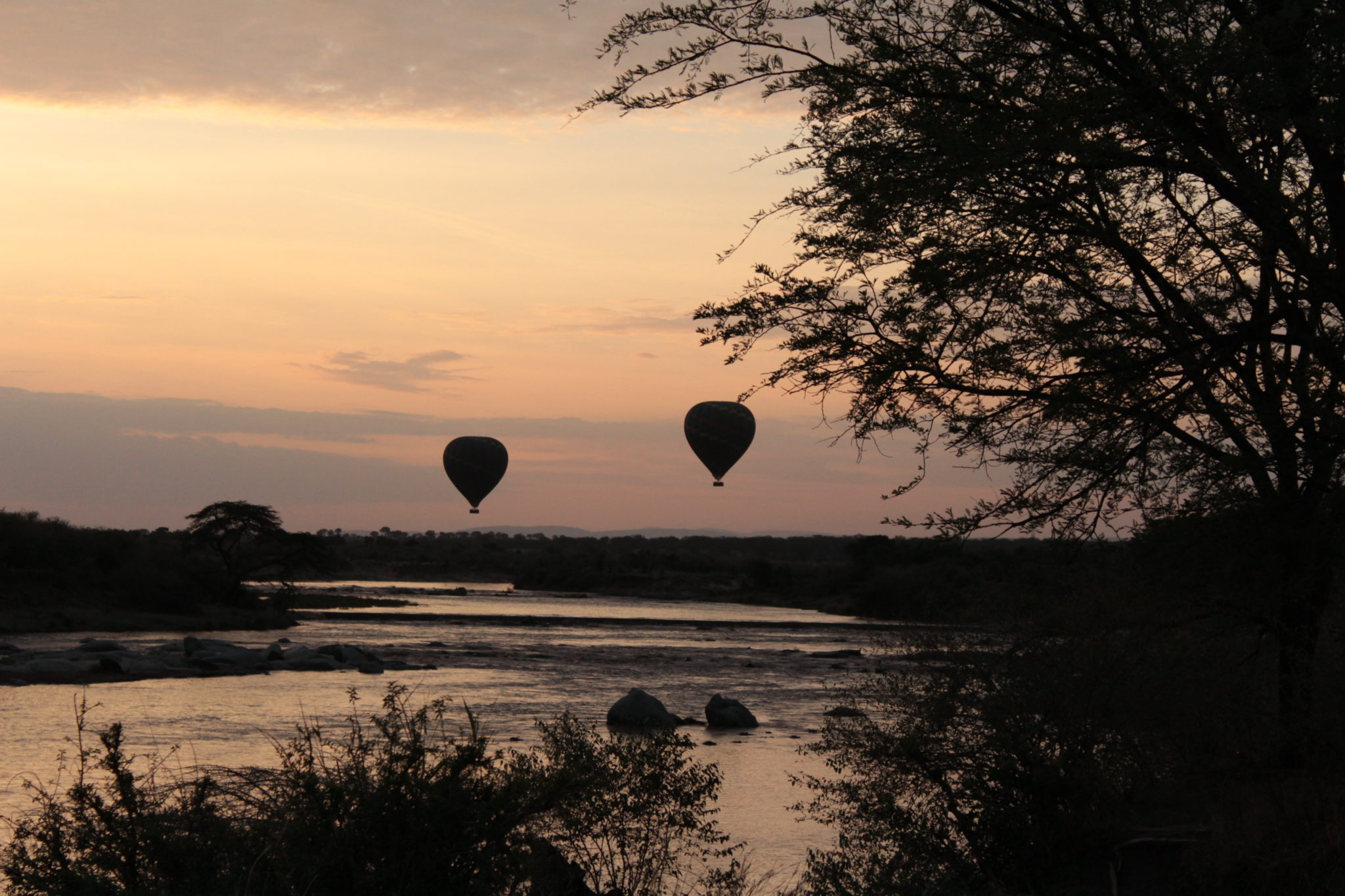
Rising over the Serengeti or Masai Mara at first light reveals the scale of the landscape. From the basket, the plains seem to stretch without end, and if the herds are nearby, you begin to understand the extent of their movement in a way that is difficult from the ground. Most flights finish with breakfast in the bush, making it a memorable start to the day.
Photograph the Great Migration
A photography-led safari gives you the time and freedom to capture the Great Migration as it unfolds. Game drives can begin before sunrise to make the most of the early light, with a private vehicle offering space for camera equipment and the flexibility to position yourself for the best possible angle. A photography-minded guide understands how light and animal behaviour shape an image and will give you time to work with a sighting rather than moving on too quickly.
Explore the Landscape on Foot
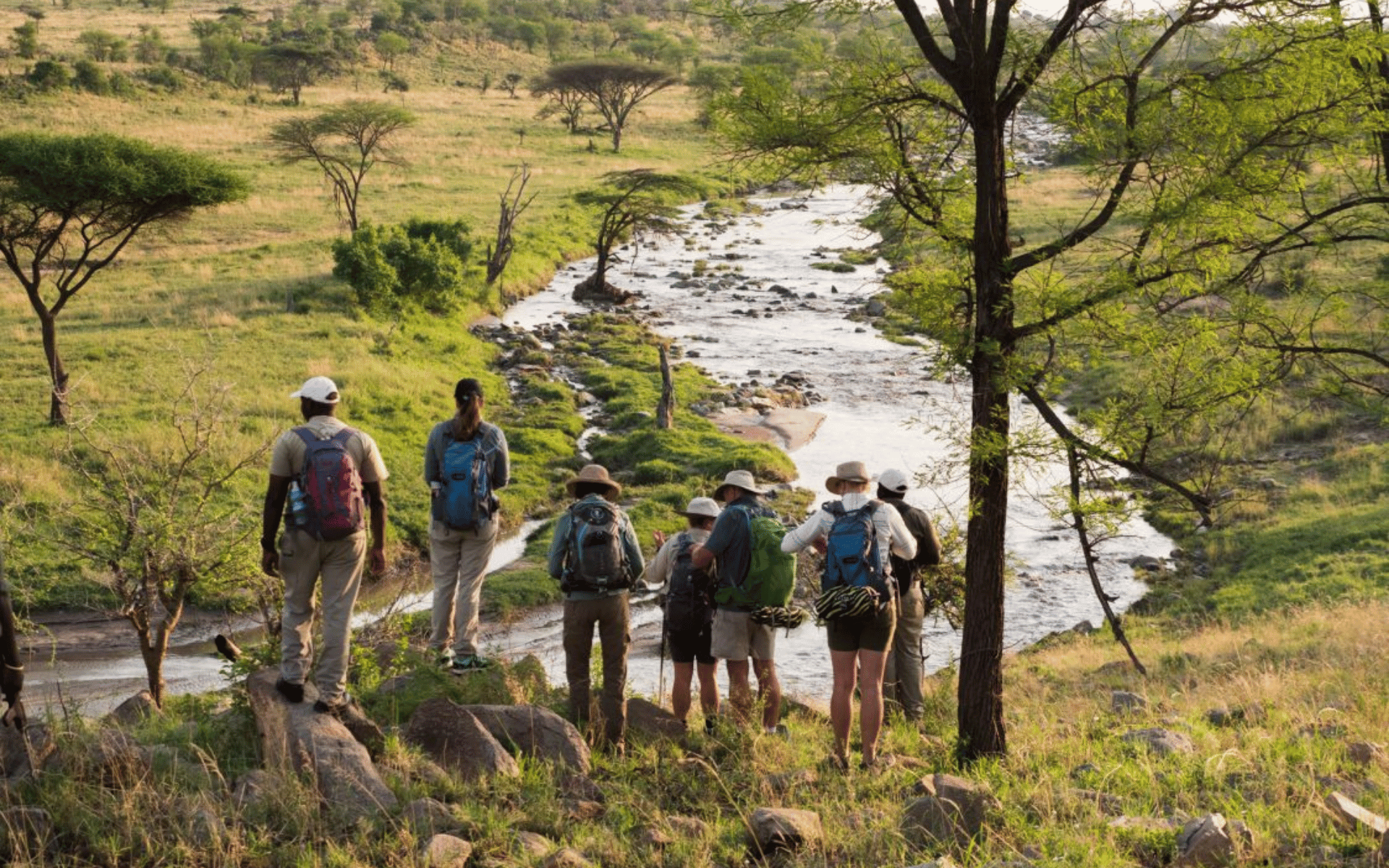
A walking safari reveals details of the landscape that disappear from a vehicle. On foot, you begin to notice tracks in the dust and changes in the environment that are easily missed on a game drive. With an experienced guide, it becomes a slower, more personal way to understand the ecosystem that supports the herds.

Plan Your Great Migration Safari
When we plan your Great Migration safari, we begin with the experience that matters most to you. We build the itinerary around where the herds are likely to be and the camps that offer the best access.
One safari specialist works with you from the first idea to the final transfer, so every decision is made with a clear understanding of how you want to travel. Enquire now and let us start planning your Great Migration safari.