Post Last updated on November 17, 2025
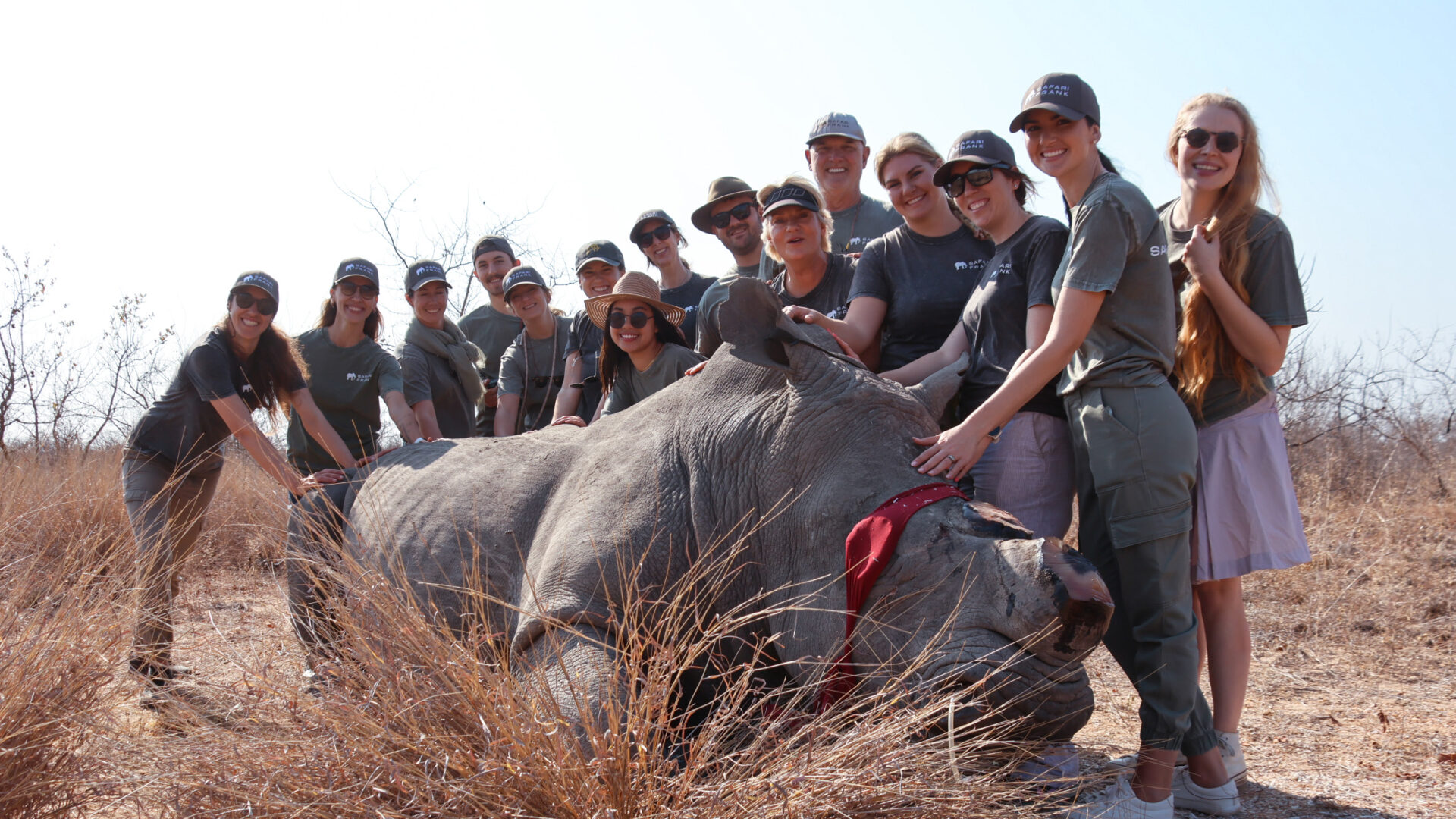
On World Rhino Day, 22 September 2025, our team at SAFARI FRANK joined a remarkable group of conservationists in the Greater Kruger National Park for an operation that was as emotional as it was essential. The dehorning of a rhino.
For many, the idea of removing a rhino’s horn feels unsettling, and it is. But with poaching still claiming hundreds of rhinos in Kruger every year, it remains one of the most effective ways to keep these giants alive.
Why dehorning matters
Despite international bans, demand for rhino horn continues to fuel sophisticated poaching syndicates. Between January and June this year, South Africa lost 195 rhinos to poaching, and Kruger has seen at least 400 lost annually since 2020.
Dehorning does not harm the rhino. The procedure is much like trimming a fingernail: a veterinarian tranquilizes the animal, removes the horn just above the growth plate, treats the area, and within 20 minutes the rhino is up again, walking away safely. The horn will regrow at about six centimeters per year, which means the process needs to be repeated every 18 months.
By removing the horn, we take away the very thing poachers are after – and in doing so, give the rhino a fighting chance to live.

Our contribution
To support this operation, SAFARI FRANK contributed R150,000 towards the dehorning and a further R150,000 for the equipment needed by the K9 anti-poaching unit and the ranger training team on the ground.
CEO Johan Steenhuisen explained that supporting dehorning is one of the most direct ways to protect rhinos in reserves like these, but the commitment doesn’t end there. Rangers need the right tools, weapons, GPS collars for their dogs, and safety equipment to do their dangerous work effectively.
For Frank, Co-founder of SAFARI FRANK, the experience was deeply personal. He described how, as a trained guide, seeing a rhino without its horn was emotional, but if that sacrifice meant the animal’s survival, it was worth it. The operation, he reflected, was a reminder of why SAFARI FRANK was started in the first place – to make safaris a force for good.

Conservation in action
The operation itself was a masterclass in teamwork. A fixed-wing aircraft and helicopter helped locate and guide the rhino into open terrain. A wildlife vet darted the animal, administered oxygen, and monitored every breath. Rangers secured the area, while the reserve’s conservation team ensured everything ran smoothly.
During the brief time the rhino was immobilized, DNA samples were taken, a microchip fitted, and the horn carefully removed. Minutes later, the reversal drug was given, and the rhino was back on its feet, free to roam.
Wildlife vet Dr. Ben Muller, who oversaw the procedure, explained that the rhino doesn’t feel pain and that the process is exactly like cutting a fingernail. From dart to release, the entire operation takes less than 20 minutes, and the animal’s welfare remains the top priority.


Helicopter pilot Gerry McDonald of Big Game Heli Services spoke of the precision needed during aerial darting. Conditions like wind, terrain, and the rhino’s movements all play a part, and there is only a short window to ensure the animal lies in a safe position for both itself and the team.
For Conservation Manager Francois Retief, this work is frontline defense. He pointed out that the rhino they worked on had been dehorned before and this was a follow-up. Removing the horn reduces the incentive for poachers dramatically, but the operations are costly. Without support from partners like SAFARI FRANK, many reserves would struggle to maintain the frequency needed to keep rhinos safe.


Strength in partnership
This work is costly, and not every reserve has the resources to do it consistently. That’s why partnerships matter so deeply. As the Southern African Wildlife College reminds us, every rhino saved is the result of many people and organizations coming together.


Be part of the change
At SAFARI FRANK, we believe the future of safari tourism and conservation are inseparable. Every guest journey includes a conservation levy, which directly funds projects like rhino dehorning, ranger support, and habitat restoration.
Frank reflected that without conservation, there will be no wildlife left to see, and without tourism, there won’t be the funds to protect it. Travelers today are seeking safaris with purpose and that is something we actively welcome and champion.
Dehorning alone won’t end poaching. But it does buy us time. Time to strengthen anti-poaching units, stabilize rhino populations, and keep these animals safe. And with every safari booked through SAFARI FRANK, our guests become part of that story too.
Together, we’re protecting Africa’s wild heritage, one rhino at a time.