Post Last updated on August 20, 2026
Capturing incredible wildlife photos on safari requires the right gear and a thoughtful approach. A camera with fast autofocus and a telephoto lens (at least 400mm) is essential, along with ethical practices that respect the animals’ natural habitat.
Key takeaways:
- For compelling portraits, focus directly on the animal’s eye to create a connection with the viewer.
- Find a full list of essential equipment, from camera bodies to memory cards, in the sections below.
- Practice these skills on a bespoke photo safari with one of our expert guides for personalized coaching.
- A telephoto lens with a focal length of at least 400mm is recommended for detailed shots from a safe distance.
- Pack at least two spare batteries and multiple high-capacity (32GB-64GB) memory cards so you never miss a moment.
- Always prioritize animal welfare by remaining unobtrusive and respecting the wildlife’s natural environment.

How to photograph wildlife on a safari
In the world of travel, few experiences can match the raw excitement and beauty of a wildlife photography safari. It’s an opportunity to not only witness nature in its most untamed state but also to capture moments that will last a lifetime.
To make the most of this adventure, some preparation and the right equipment really help. We will look at how you can elevate your luxury safari experience from a simple sightseeing trip to a professional-grade photographic expedition.
Before we look at camera settings and gear, it helps to recognize the importance of responsible tourism in wildlife photography.
Ethical wildlife photography guidelines
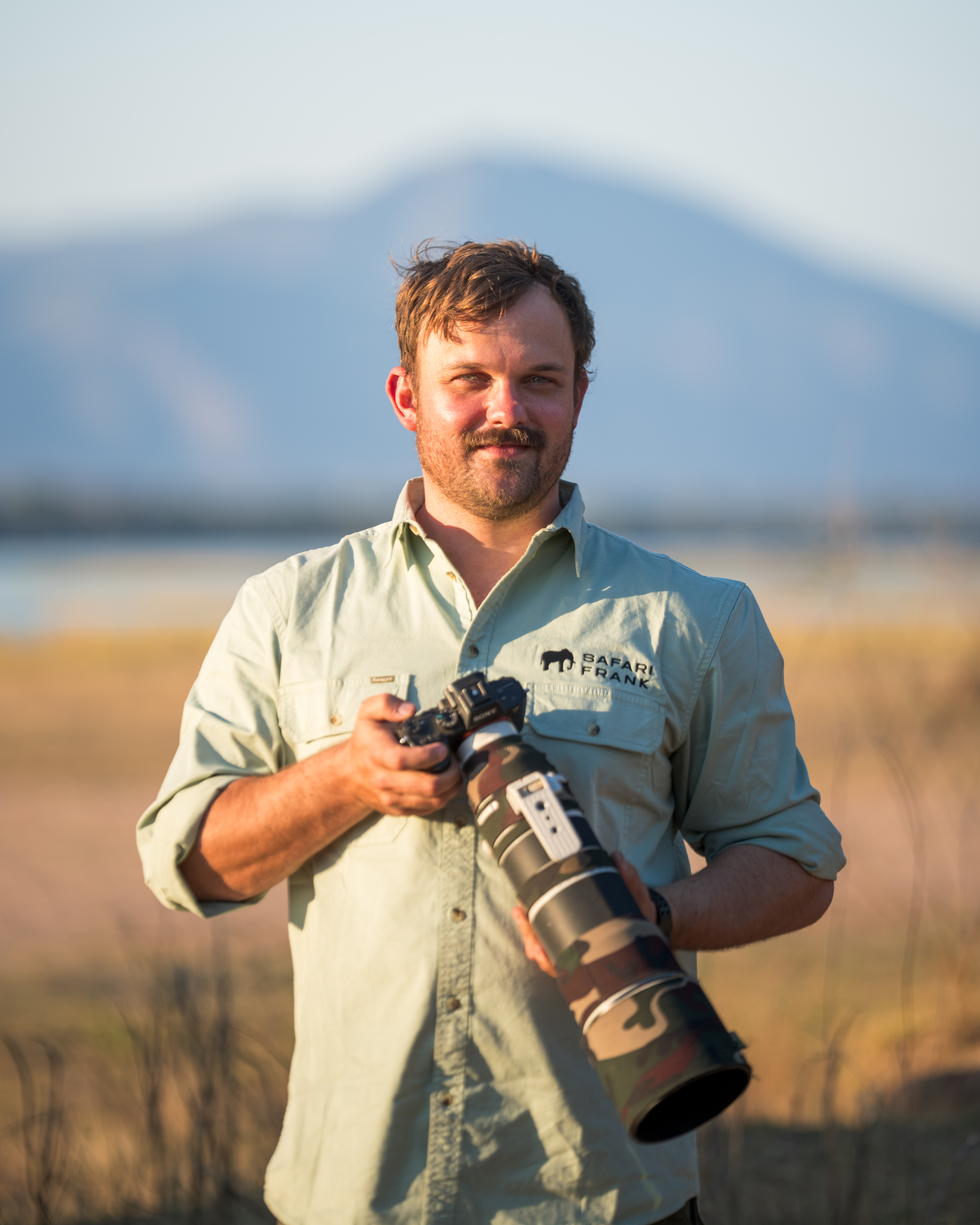
As Frank Steenhuisen, a seasoned safari guide, often reminds guests, your presence should be as unobtrusive as possible, allowing you to capture authentic moments without disturbing the delicate balance of nature.
Respectful distance
On a photo safari, remember you are a guest in the wildlife’s natural habitat. Maintaining a respectful distance from animals and following your guide’s instructions supports both your safety and animal welfare.
“The least sustainable thing you can do while traveling is demand your new environment and host culture adapt to fit your comfort zone.”

Essential Equipment for Wildlife Photography
The right equipment supports your eye for wildlife moments, so think about your camera body, lens choices, memory cards, and a few smart extras as one complete safari kit.
The Camera Body
Start by selecting the right camera. For safari wildlife photography, you’ll need a camera that can keep up with fast-moving subjects and varying light conditions. Look for these key features:
- Fast autofocus capabilities
- High megapixel count for detailed images
- Burst mode for capturing action sequences
- Weather-sealed body to withstand dusty conditions
Lenses
With lenses, the familiar saying “you get what you pay for” holds true. While it’s possible to capture beautiful images with standard lenses, serious wildlife photographers should consider investing in a lens with a focal length of at least 400mm. This allows you to get close-up shots of animals without disturbing them.
Consider bringing multiple lenses to cover different scenarios:
- A telephoto zoom (e.g., 100-400mm) for distant subjects
- A wide-angle lens for landscape shots and environmental portraits
- A mid-range zoom for versatility
In-camera and lens stabilization features are invaluable when shooting from safari vehicles, helping you maintain sharpness even when the engine is running.
Memory Cards
Memory cards are vital for storing your precious images. Here’s what to consider:
- Capacity: Opt for large cards (32GB-64GB+) to avoid frequent swapping.
- Speed: Fast write speeds are essential for burst mode and high-resolution images.
- Quantity: Always bring spares. It’s better to have too much storage than not enough.
- Quality: Invest in reputable brands to reduce the risk of card failure.
Recommendation: Consider using multiple smaller cards instead of one large one. This strategy can protect you from losing all your photos if a single card fails.
Beyond the Basics
Once your core kit is ready, a few thoughtful accessories make long days on safari smoother and help keep your gear working at its best.
To ensure you never miss a shot, pack these essentials:
- Extra batteries (at least two fully charged spares)
- Battery charger and international plug adapters
- High-capacity memory cards (32GB-64GB) and spares
- Memory card readers for quick image review and backup
- Laptop and external hard drive for reviewing and backing up images
Practical accessories matter too. A specialized camera bag designed for safari conditions protects your gear from dust and sand. Pack a thorough lens cleaning kit, as dust and fine particles are inevitable on game drives. Consider dedicating a soft pillowcase for quick lens wipes in the field.

How to set up your safari camera
You need a solid grasp of your camera’s technical settings to work with changing light and movement.
Shutter and aperture
Familiarize yourself with shutter speed. A useful guide is the reciprocal rule, where your shutter speed should match or exceed your focal length to avoid blur.
ISO and noise
Modern cameras handle high ISO remarkably well, allowing you to shoot in low-light conditions during dawn and dusk game drives.
Autofocus and burst
Configure your autofocus points in a tight cluster around your subject for faster, more accurate focusing on moving animals.
RAW format
Shooting in RAW format provides significantly more flexibility during post-processing compared to JPEG files.
How to compose safari wildlife photos?
Focus on compositional elements that create compelling wildlife portraits.
Eye-level focus
Getting down to eye-level with your subject creates intimate, engaging images. The animal’s eye should be your primary focus point. A sharp eye draws viewers into the photograph.
Environmental portraits
Mix close-up portraits with wider environmental shots that show animals in their habitat context, telling a more complete story.
Foreground and background
Experiment with framing techniques using natural elements like branches or vegetation to add depth. Consider the rule of thirds to create balanced, visually interesting compositions.
Beyond the Snapshot: A Photographer’s Moment
You’re settled in the open-air vehicle as dawn breaks when your guide quietly points. A leopard rests on a low branch.
Instead of immediately shooting, you take a breath, brace your 400mm lens on the vehicle’s frame, and adjust your shutter speed to capture the low light without motion blur.
Your guide repositions for a clear, ethical angle, allowing you to frame a powerful, eye-level portrait without disturbing the cat’s peaceful moment.
What on-drive strategies improve safari photos?
Maximize your photography opportunities during game drives through practical strategies.
Golden hour setup
Dawn and dusk offer the best light. Golden hour provides warm, flattering tones while the blue hour creates dramatic atmospheres. For photographers who love golden hour in wild desert settings, our Photographic Safari Namibia is a great fit.
Vehicle stability
Use your safari vehicle as a stable shooting platform. Bean bags placed on the vehicle’s edge provide excellent support, and you can request that your guide turn off the engine for key shots to reduce vibration.
Guide collaboration
Your expert guide is an invaluable resource for wildlife safari photography. Their knowledge of animal behavior helps position the vehicle for optimal angles and lighting. They can anticipate movements and actions, giving you precious seconds to prepare. Don’t hesitate to communicate your photographic needs, as guides appreciate working with serious photographers.
Preparing for Your Safari
Good safari images usually start with practice and planning at home, so use the time before you travel to build habits that feel natural once you are in the bush.
Research and Practice
Before your trip, familiarize yourself with your equipment. Practice capturing moving subjects and quickly adjusting settings. Research the wildlife you’re likely to encounter and their behaviors to anticipate photo opportunities. If you are new to safari photography or refining existing skills, learning composition techniques helps lift your images beyond simple record shots.
On-Site Learning
Use downtime during your safari to review your images. This allows you to:
- Identify and correct any technical issues
- Refine your technique for upcoming shoots
- Backup your precious captures to prevent data loss
Modern smartphone cameras have become surprisingly capable for safari photography. Configure your phone’s zoom presets before game drives for quick adjustments. Experiment with different angles and portrait mode for stunning results.
Using a wrist strap prevents accidental drops when shooting from moving vehicles. Do not overlook video capture. Short clips add dynamic elements to your safari story and are easy to share on social media.


The Bigger Picture
A wildlife photo safari is more than just about getting the perfect shot. It gives you space to connect with nature and understand the delicate ecosystems you’re visiting.
Building a narrative with your photos
As you frame each photograph, consider the story you’re telling and the impact your presence has on the environment.
Leaving a positive footprint on safari
Destinations like Zambia offer exceptional safari photography opportunities, combining abundant wildlife with striking scenery and experienced guides who understand photographers’ needs.
If you approach your safari with respect for the wildlife and local communities, you are likely to return with powerful images and a deeper appreciation for the natural world. As Frank Steenhuisen puts it, “Travel is fatal to prejudice… And, if you do it right, it’s also fatal to ignorance.”
So pack your gear, open your mind, and prepare for an adventure that will change the way you see the world – one frame at a time.
Wildlife photography FAQs for safari travelers
Does SAFARI FRANK plan private, photography-focused safaris with exclusive-use options?
Yes. We create bespoke photo safaris, including private vehicles, exclusive-use camps, private charters, and custom schedules to maximize photography time. Contact us to plan your goals and logistics. See our photography expeditions.
Can I book a photography workshop with a professional photographer through SAFARI FRANK?
Yes. SAFARI FRANK runs photography-focused safaris and has partnered with award-winning photographers. We can arrange on-site tuition, private photography guides, small group workshops, and vehicle hides for optimal shooting. Check upcoming dates and custom workshop options.
Can my photography safari include conservation activities I can photograph responsibly?
Yes. SAFARI FRANK designs trips that can include conservation-in-action activities such as ranger visits or wildlife monitoring, arranged privately to avoid crowding. Discuss these additions during planning to ensure photography is low-impact.
How do I start planning a photo safari with SAFARI FRANK?
Begin by enquiring about your travel dates, photographic aims, preferred regions, and rough budget. Our planners will propose a tailored itinerary with recommended camps, private vehicles, and specialist guides, plus timing to match light and wildlife movements. Start by reading our Travel Info.