Why we like it
- Home to the world-famous Great Migration
- Exceptional year-round wildlife viewing, including all the Big Five
- A mix of luxury lodges and intimate mobile camps in prime locations
- Breathtaking scenery that captures the timeless soul of Africa
Discover the Heart of Africa’s Wilderness
The Serengeti is the stage for Africa’s most iconic wildlife drama, the Great Migration. Yet it offers far more than this single spectacle. From the vast southern plains to the remote northern hills, every region tells its own story. You might witness a dramatic river crossing or lions hunting as the sun rises. For a new perspective, float silently above the herds on a breathtaking hot-air balloon safari.
The Serengeti captures the true spirit of Africa: wild, vast, and deeply moving. Stretching across northern Tanzania, its open plains and scattered acacias frame a landscape that feels timeless. Each year, millions of wildebeest and zebra cross these lands in search of fresh grazing. Predators like lions and cheetahs follow close behind, creating nature’s greatest wildlife drama.
Recognised as a UNESCO World Heritage Site, the Serengeti is one of the last true wildernesses on Earth. Days begin with golden sunrises over the plains and end with distant lions calling beneath starlit skies. Every moment draws you closer to the rhythm of the wild and the soul of Africa itself.

Where is the Serengeti National Park?
The name Serengeti whispers of wildness and endless horizons. It is the soul of the African safari dream.
Located in northern Tanzania, this UNESCO World Heritage Site forms one of Earth’s oldest and most important ecosystems. It’s famed for its incredible biodiversity and the world’s largest land mammal migration.
The Serengeti National Park is part of a vast ecosystem that includes Ngorongoro, Grumeti, and Kenya’s Maasai Mara. Together, they create one continuous wilderness where animals follow ancient migratory paths shaped by the rains.
If you dream of wide-open plains, golden light, and abundant wildlife, the Serengeti is the ultimate safari destination.
What’s the difference between the Serengeti National Park and the Serengeti Ecosystem?
The Serengeti National Park is a protected area of 14,763 square kilometres managed by Tanzania National Parks Authority.
The Serengeti Ecosystem is much larger – around 30,000 square kilometres – covering all areas influenced by the Great Migration.
It includes the Serengeti National Park, Ngorongoro Conservation Area, Maswa Game Reserve, Loliondo, Grumeti, Ikorongo, and Kenya’s Maasai Mara.
The animals, especially the wildebeest, zebra, and gazelle, roam freely across this ecosystem. Their movements follow the rains and the promise of fresh grass.
Which part of the Serengeti should I visit?
Unlike the Kruger, which has a distinct private vs. public park setup, the choice in the Serengeti is more about when you go and which region of the vast park you visit to align with the Great Migration.
The Southern Plains (Ndutu) are best from December to March. This is the calving season, where hundreds of thousands of wildebeest give birth. The open, short-grass plains offer phenomenal viewing of the herds and the attendant predators.
The Western Corridor & Grumeti are prime from May to July. Here, the migration must cross the Grumeti River, an area known for its giant crocodiles and dramatic river crossings as the herds push north.
The Northern Serengeti (Kogatende & Lamai) is the place to be from July to October. This is the stage for the most famous spectacle: the dramatic Mara River crossings, as the herds brave the treacherous waters to reach the fresh grasses of the Maasai Mara.
The Central Serengeti (Seronera Valley) offers excellent, year-round wildlife viewing. It has a very high concentration of resident animals, particularly big cats, and is a fantastic base at any time of year, though it can be busier than the more remote regions. The choice depends entirely on what you want to see and when you can travel.
What is the history of the park?
The name “Serengeti” comes from the Maasai word siringit, meaning “the place where the land runs on forever.” For centuries, the nomadic Maasai people have grazed their cattle on these plains alongside the wildlife.
The area was first recognised by colonial conservationists in the 1920s. It was established as a national park in 1951, initially including what is now the Ngorongoro Conservation Area. In 1959, the two were separated, creating the park boundaries we know today. The pioneering work of conservationists like Bernhard Grzimek in the 1950s, documented in his book and film Serengeti Shall Not Die, brought global attention to the area and was instrumental in its preservation.
This history is one of a growing understanding of conservation, moving from a focus on protecting a single park to managing an entire, dynamic ecosystem, acknowledging that the wildlife’s needs transcend human-drawn lines on a map.
What is the Serengeti National Park like?
It is a landscape of profound scale and beauty. The word “savannah” finds its ultimate expression here. The southern part of the park is dominated by the iconic “endless plains”—vast, short-grass landscapes dotted with granite outcrops known as kopjes. These kopjes act as islands of life, providing water, shade, and lookout points for predators like lions and cheetahs.
As you move north, the landscape transitions to rolling hills, taller grasses, and acacia woodlands. Rivers like the Seronera, Grumeti, and Mara create ribbons of riverine forest that are arteries of life, providing year-round water and shelter for a huge diversity of animals.
To be in the Serengeti is to feel small in the face of immense nature. It’s the sound of millions of hooves on the move, the sight of a lone lion surveying its kingdom from a kopje at dawn, and the feeling of being immersed in one of the planet’s last great wildlife spectacles.
What animals are found in the area?
The Serengeti is a wildlife Eden, without exaggeration. It is most famous for the Great Migration, an immense circular journey of over 1.5 million wildebeest and hundreds of thousands of zebra and gazelle. Following them is Africa’s largest concentration of predators.
The Big Five – lion, leopard, elephant, buffalo, and rhinoceros (the black rhino is present but critically endangered and rarely seen)—are all here. The Serengeti is particularly renowned for its lion populations; seeing a pride is almost a guarantee. Leopards are masters of camouflage, often found lounging in the sausage trees along riverbanks, while cheetahs thrive on the open plains where they can unleash their incredible speed.
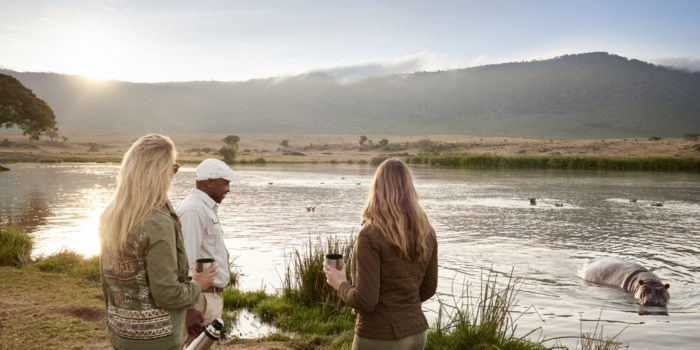
Beyond the headliners, the diversity is staggering. You’ll find huge herds of elephant and buffalo, graceful giraffes, hyenas, jackals, hippos, crocodiles, and more than 30 species of plains grazers. The park is also a bird-watchers’ paradise, with over 500 species recorded, from the striking secretary bird to the tiny, colourful lilac-breasted roller.


What activities are available in the Serengeti?
The Serengeti experience is focused on immersion in the wilderness, with a few truly spectacular ways to do it.
The primary activity is the game drive. In open-sided 4×4 vehicles, expert guides interpret the environment, track animals, and position you for incredible sightings and photographic opportunities. Game drives typically happen in the early morning and late afternoon when animals are most active.
One of the most iconic Serengeti experiences is a hot air balloon safari. Launching at dawn, you float silently over the plains as the sun rises, granting a breathtaking perspective of the scale of the landscape and the herds below. It’s a truly unforgettable, once-in-a-lifetime activity.
In certain designated areas and private concessions, guided walking safaris are possible, offering a chance to connect with the bush on a more intimate level, focusing on tracks, plants, and smaller creatures you might miss from a vehicle.


Where can I stay in the Serengeti?
Accommodation in the Serengeti caters to every taste, from classic under-canvas romance to the utmost in modern luxury.
Mobile Tented Camps are a fantastic option for those who want to be in the heart of the migration. These camps move several times a year to follow the herds, ensuring you are always in a prime location. They offer a comfortable, authentic safari experience with excellent service, hot showers, and chef-prepared meals. Our itinerary uses the Serengeti Safari Camp, a prime example of this style.
Permanent Lodges offer more solid structures and amenities like swimming pools and spas. They are strategically located in areas of high resident wildlife concentration, such as the central Seronera region or on the fringes of the park in exclusive private reserves like Grumeti.
Luxury Lodges and Exclusive Camps in private concessions like Grumeti or Singita offer the highest level of service, privacy, and exclusive access to vast tracts of land, with activities like night drives and walking safaris that are not permitted in the main national park.
Getting to and from the Serengeti
Accessing the Serengeti is surprisingly seamless. The most common route is to fly from Arusha Airport (ARK) or Kilimanjaro International Airport (JRO) to one of the many airstrips scattered throughout the park. These “bush flights” in small Cessna or similar aircraft are an experience in themselves, offering incredible views of the landscape below. Your camp’s guide will meet you right at the airstrip.
It is also possible to drive to the Serengeti from Arusha, often as part of a longer safari circuit that includes Tarangire and the Ngorongoro Crater. The drive from the Ngorongoro Crater rim down to the southern plains of the Serengeti is spectacular, as you watch the highlands give way to the endless plains.
Why should I visit the Serengeti National Park?
You should visit the Serengeti to witness one of the last great wildernesses on Earth. In terms of wildlife and landscapes, it delivers on every single promise. While the Great Migration is the main draw, the Serengeti’s true magic lies in its sheer scale and the feeling of being in a world that has not changed for millennia.
The exclusivity of many of its camps means you can experience this vastness without the crowds, offering an intimate connection with nature. Whether you are watching a lioness hunt on the plains, floating over the herds in a balloon, or simply listening to the sounds of the African night from your tent, the Serengeti offers an experience that is both profoundly humbling and exhilarating. It is the definitive African safari destination, a place that will not just meet your expectations, but will redefine them entirely.
| jan | feb | mar | apr | may | jun | jul | aug | sep | oct | nov | dec |
 | | |  | |  | | | | | | |
= Best
= Good
= Mixed


Safaris
Serengeti
Ready for an adventure? Lets Talk!
Contact SAFARI FRANK to get started on your safari of a lifetime!