Post Last updated on August 20, 2026
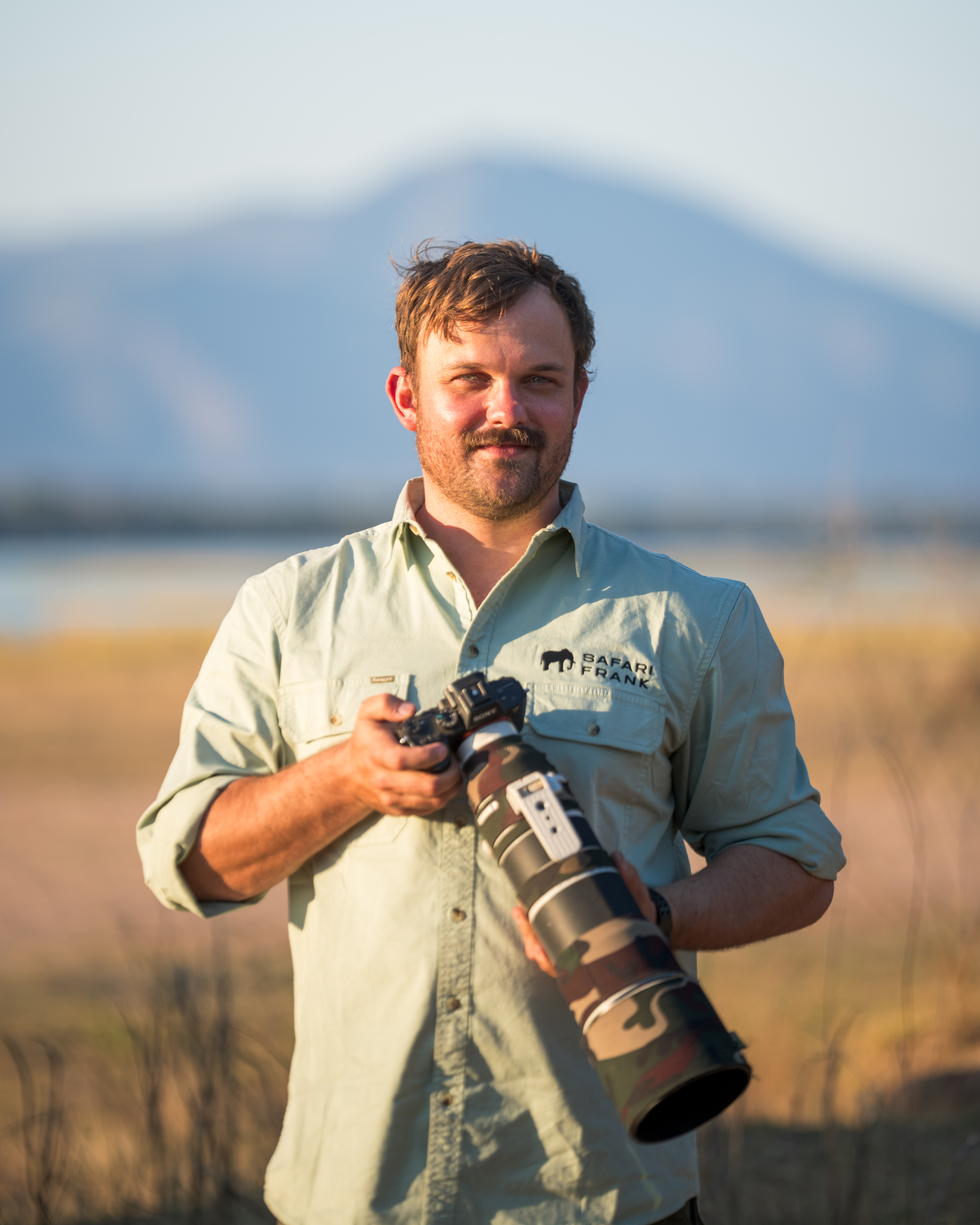
Namibia is a land of ancient wonders, from the 80-million-year-old Namib Desert to its pioneering conservation efforts. We’re Frank and Gesa, here to share insights on its desert elephants, haunting Skeleton Coast, and thriving black rhino population.
Highlights:
- Namibia is home to the world’s largest population of free-roaming cheetahs.
- Learn more about Namibia’s unique features and contact SAFARI FRANK to plan your bespoke trip.
- Participate in conservation by tracking free-roaming black rhinos through our exclusive partnership.
- The Namib Desert is the world’s oldest, having existed for approximately 80 million years.
- Over 40% of Namibia is dedicated to conservation, protecting its vast, undisturbed wilderness areas.
- Explore the famous Skeleton Coast, a shoreline known for its numerous historical shipwrecks.
Why Visit Namibia for a Luxury Safari?
Greetings and ‘Guten Tag’ from Namibia. We’re Frank and Gesa, have travelled across this remarkable country, curating extraordinary experiences for our guests.
These interesting facts about Namibia reveal a land where ancient desert scenery meets pioneering conservation, vibrant culture, and remarkable natural wonders. In this guide, we share a selection of highlights from this desert jewel of Africa.
1. Earth’s Most Ancient Desert
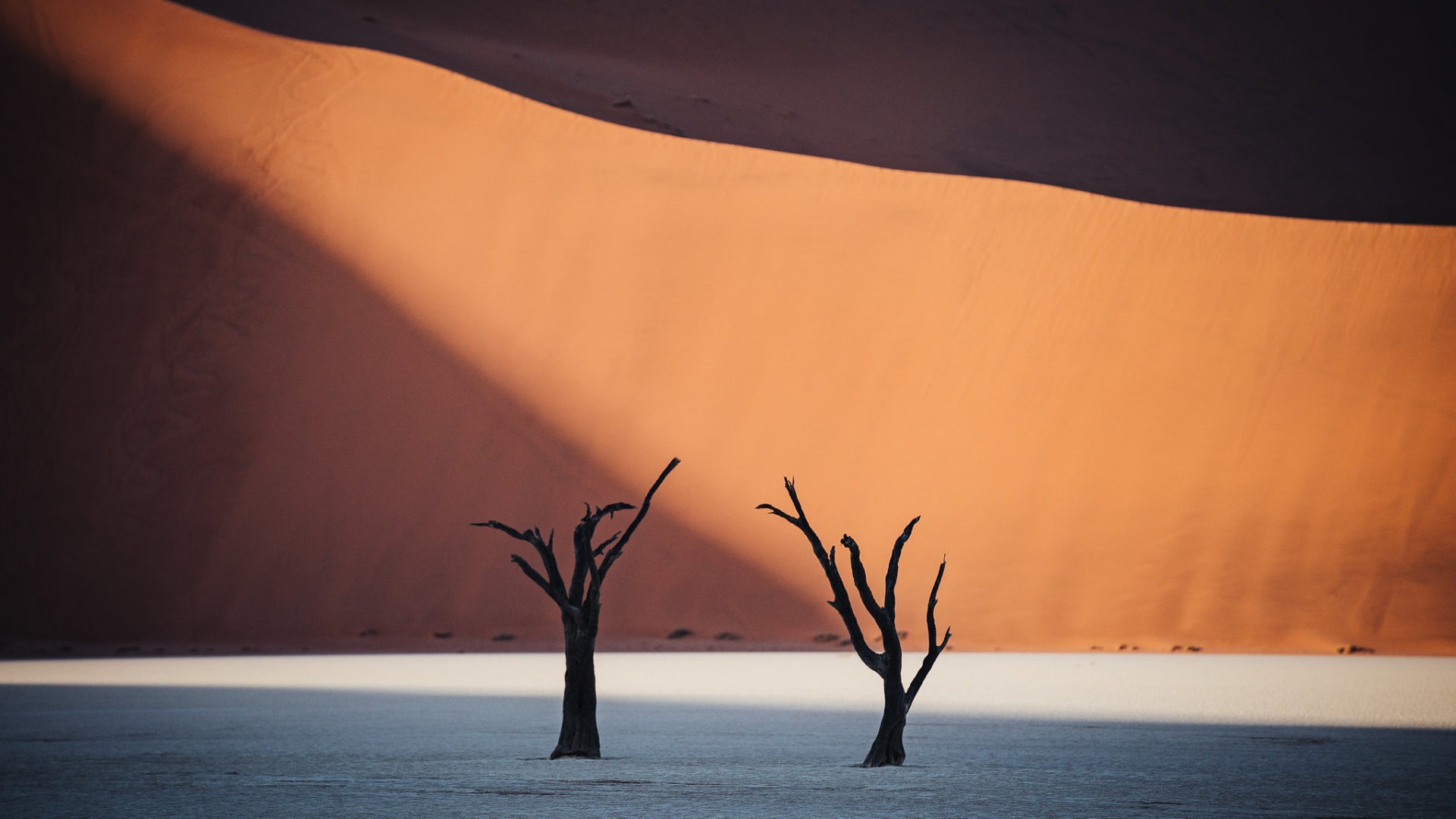
The magnificent Namib Desert has shaped this region for around 80 million years, making it one of the oldest deserts on Earth.
Choosing an Unforgettable Escape
Your calendar is packed with back-to-back meetings, and you’re searching for a true escape from the noise. You scroll past crowded luxury resorts, seeking something more meaningful.
Then you picture it: standing completely alone atop a single dune in a desert that has existed for 80 million years, with a guide leading you on a route few will ever see. You realize you need more than a vacation. You want to experience true isolation.
Namib Desert age
While the Sahara may claim greater fame, the Namib is significantly older, which adds to its sense of timelessness. The name Namib, meaning “the vast place” in the local Nama language, perfectly captures its boundless horizons.
Private dune routes
For our discerning travelers, we’ve crafted exclusive routes that bypass the usual tourist circuits, offering profound solitude among towering dunes that glow copper and gold in the dawn light.
Here, you can experience the desert as it has existed for millennia, in sublime isolation. The region also encompasses the NamibRand Nature Reserve, recognized as an International Dark Sky Reserve, where world-class stargazing reveals the cosmos in breathtaking clarity far from any light pollution.


2. The Haunting Skeleton Coast
Along Namibia’s mesmerizing coastline lies one of Africa’s most compelling stories, a shoreline lined with shipwrecks that came to rest in these waters.
Shipwreck heritage
From Portuguese caravels to modern fishing vessels, each wreck tells a story of maritime adventure and challenge.
Private expeditions
We arrange private expeditions along the Skeleton Coast north of Swakopmund, where guests can explore these atmospheric sites in exclusive comfort. The German colonial heritage remains evident throughout coastal towns like Swakopmund, where distinctive architecture and culinary traditions reflect the history of Namibia’s European influences.

3. A Legacy of Conservation
As wilderness becomes increasingly scarce, Namibia sets a high standard for conservation, with over 40% of its territory under careful environmental stewardship.
Namibia’s network of protected spaces
This remarkable commitment to preservation has created vast sanctuaries where nature flourishes undisturbed. Etosha National Park anchors these conservation efforts, providing exceptional wildlife viewing alongside community-based initiatives that protect Namibia’s free-roaming cheetah population – among the largest concentrations of these magnificent cats on Earth.
Private concession access
Our guests experience these protected areas through privileged access to private concessions and remote regions, where conservation success stories unfold daily. This dedication to preservation ensures that future generations will continue to witness the untamed beauty of the African wilderness.


4. Home to the Desert-Adapted Elephants
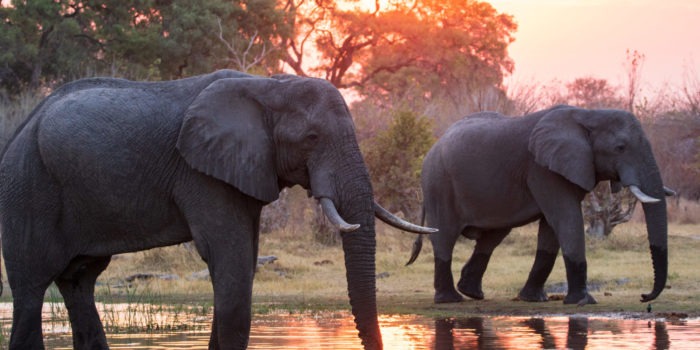
In the remote river valleys of Damaraland, where ancient watercourses carve through rugged terrain, dwell some of Earth’s most remarkable elephants. These desert-adapted giants have evolved specialized strategies to thrive in one of the planet’s most challenging environments.
The Phantom herd
The legendary “Phantom herd” remains particularly elusive, moving like shadows through the mountainous wilderness. This remarkable region also supports populations of desert-adapted oryx and gemsbok, their elegant forms perfectly suited to the arid conditions.
Expert-led tracking
Our tracking expeditions, accompanied by leading researchers and local experts, offer the rare privilege of witnessing these extraordinary creatures in their natural habitat, while our luxury mobile camps ensure comfort never compromises authenticity.

5. Sanctuary of the Black Rhino
Perhaps our most profound offering is the opportunity to track the last free-roaming black rhinos on Earth.
Save the Rhino Trust
Through our exclusive partnership with Save the Rhino Trust, guests participate in genuine conservation efforts while enjoying rare access to these magnificent creatures.
Conservation in action
In Damaraland’s rugged beauty, accompanied by expert trackers who have dedicated their lives to protecting these endangered animals, you’ll experience wildlife conservation at its most authentic and moving.
This experience goes beyond simple game viewing. You become part of one of conservation’s most compelling success stories.


Namibia Safari FAQs
When is the best time to visit Namibia for dune photography and wildlife viewing?
Visit Namibia in the dry season (May to October) for clearer skies and concentrated wildlife. Shoulder months April/May and October/November balance milder weather and fewer crowds. See our seasonal safari travel guide for detailed advice.
Can I self-drive Namibia, and what should I plan for?
Yes. Self-drive safaris are common. Expect long distances, gravel roads, limited fuel stops, and sparse services in remote areas. A sturdy 4×4, spare tires, and flexible timing are recommended. We provide detailed self-drive planning notes and route advice.
Can I join rhino tracking and conservation activities on a Namibia safari?
Yes. Some Namibian camps partner with Save the Rhino Trust, offering guided rhino tracking on foot and conservation briefings. Guests can support projects and join tracker-led activities. Learn more about Desert Rhino Camp and conservation options.
How private and bespoke are SAFARI FRANK Namibia itineraries, and can I book exclusive-use camps?
SAFARI FRANK designs bespoke, private safaris, including exclusive-use camps and mobile tented options for families or groups. Private charters and tailored guides are arranged on request. See our guide to luxury Namibia lodges and private options to start planning your safari.