Your own vehicle, your own guide, your own schedule. Tailor-made private safaris across Botswana, Kenya, Tanzania, Zambia, Zimbabwe and Namibia, planned by people who have driven these roads themselves.
Safari Frank has been planning tailor-made African safaris since 2015. We are ATIA accredited and members of the African Travel and Tourism Association.
What a private safari actually means
A private safari means the vehicle is yours. So is the guide, the departure times, the route and the pace of the day.
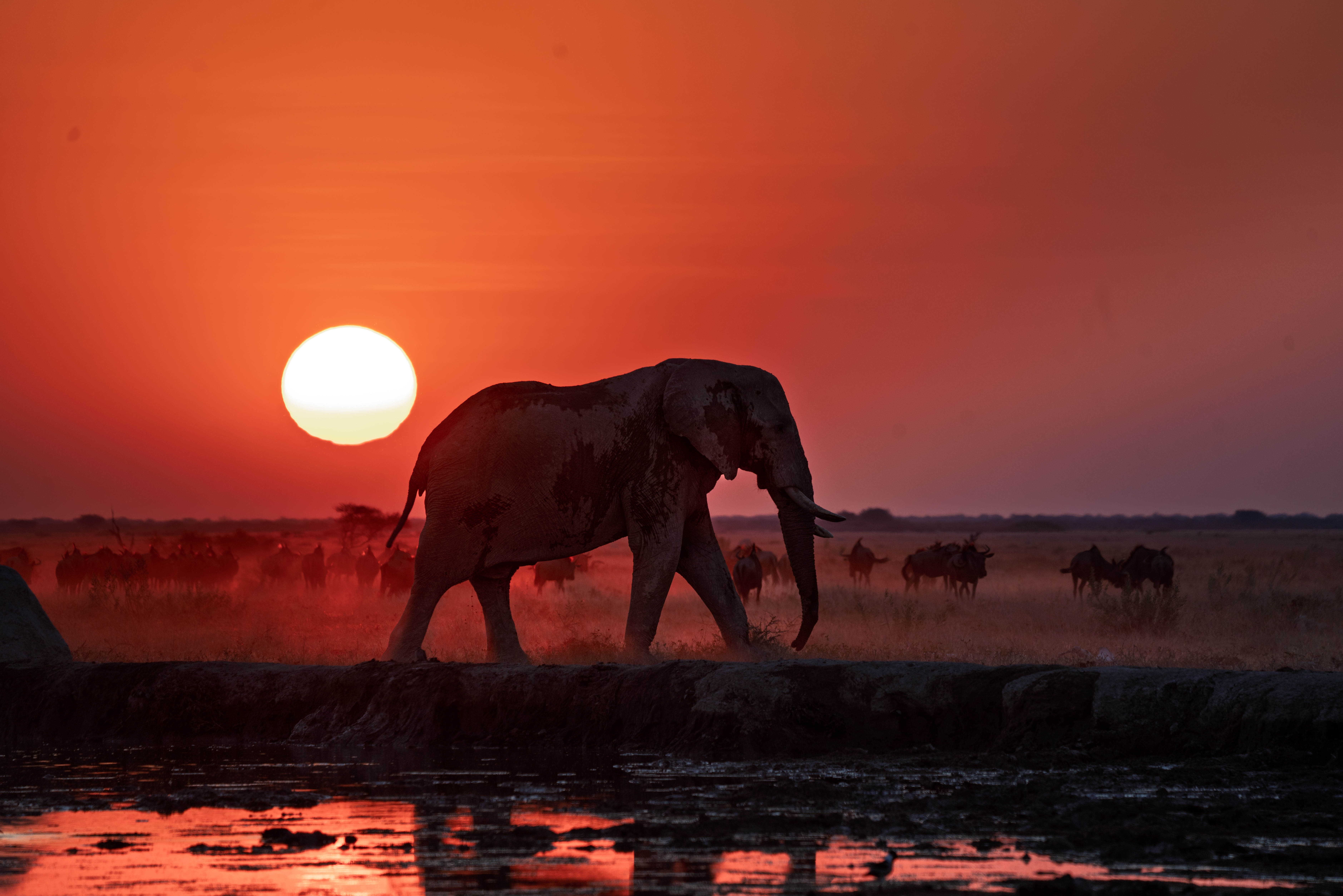
That sounds simple, and in practice it changes almost everything. You are not sharing a Land Cruiser with strangers. You are not locked into somebody’s schedule. If the lions are active at six in the evening, you stay and watch. If you would rather skip the dawn drive and sleep in, that is your call to make. If you want to sit at a waterhole for three hours waiting for elephants to come down and drink, nobody is tapping their watch.
That is the whole idea behind a private African safari tour. It gives you the freedom to travel at your own rhythm, with a guide whose full attention is on your group and nobody else.
It is worth being precise about the word, because operators use it loosely. A private safari means the vehicle and the guide are exclusive to your party. It does not automatically mean the lodge is exclusive to you. Most camps still host other guests at other tables, and shared activities like hot air balloon flights, boat cruises or guided walks sometimes include people from other vehicles. If you want the camp to yourselves, that is called exclusive use, and it is a different thing again. We arrange both, and we will always tell you which one you are actually buying.
Why private changes what you see
Most people book a private safari for comfort and flexibility. The bigger benefit, in our experience, is what it does to your game viewing.
A shared vehicle has to keep everyone happy. That usually means a sensible middle path. You stay twenty minutes at a sighting because somebody in the back has had enough, or you leave a quiet area because somebody wants to go and find the big cats. Nobody is being difficult. It is just what happens when six strangers share a day.
A private vehicle can do the opposite. It can follow a wild dog pack for two hours because you are the only people who have to agree. It can leave camp before the gate opens and come back after it closes, where the park rules allow it. It can abandon the plan entirely because your guide has heard that a leopard has been seen on a kill three kilometres away, and that is a better use of the afternoon than the route you agreed last night.
The clearest example we can give you was a safari with four people, two of whom were biologists travelling with their families. They wanted a genuinely in-depth trip built around antelopes. Not lions, not leopards, not the Big Five. Antelopes. They wanted to spend time on species that most visitors drive straight past, and they wanted to go deep on behaviour, habitat and identification. On a shared vehicle that trip would have been impossible, because you cannot ask five strangers to spend an afternoon on the difference between a puku and a reedbuck. In a private vehicle it was exactly the safari they came for.
That is the real value. A private vehicle lets you pursue your own interests at your own depth, whether that is antelopes, birds, photography, tracking or simply sitting still.
There is also the matter of seats. In a shared vehicle, somebody gets the middle seat and somebody gets a pillar in their view. In a private vehicle, everyone gets a window. Over ten days, that difference adds up to a great deal of photography and a great deal of patience preserved.
And there is the quieter benefit. A private guide learns what you are interested in. By day three they know you would rather spend an hour with a family of elephants than tick off a checklist of species. That kind of guiding only happens when the guide is working for two or four people rather than a rotating cast.
Private safari or group safari?
This is the question we are asked most often, and the honest answer is that both work. It depends on what you value and what you are prepared to spend.
A group safari is a fixed departure with a set itinerary and a shared vehicle. Everyone pays less because the costs are split. You travel with a small group of people you have usually never met, you keep to the operator’s schedule, and you see what the itinerary says you will see. For a first safari in a park where the wildlife is concentrated and easy to find, this can be excellent value.
A private safari is built around you. The itinerary is designed for your dates, your interests and your pace. The vehicle is yours. The guide is yours. You can change your mind, and the trip can change with you.
| Feature | Private safari | Group safari |
|---|---|---|
| Vehicle | Yours alone | Shared with six to nine others |
| Guide | Dedicated to your group | Shared across the vehicle |
| Departure times | Your choice | Fixed by the operator |
| Route | Built around you | Set itinerary |
| Changes mid-trip | Easy | Very limited |
| Seats | Everyone gets a window | Somebody gets the middle |
| Cost per person | Higher | Lower |
| Best for | Families, photographers, honeymooners, solo travellers, repeat visitors | Budget-conscious travellers and people who enjoy company |
The trade off is cost, and it is a real one. A private vehicle split between two people costs considerably more per person than the same vehicle split between six. That is the single biggest factor in the price difference, and it is worth understanding before you decide.
Where private earns its premium:
Families. Children set the pace, and children are unpredictable. A private vehicle means nobody is apologising for a tired eight year old at four in the afternoon, and nobody is worrying about disturbing other guests at dinner.
Photographers. For anyone serious about photography, a private vehicle is close to a no-brainer. You need to be in position before the light changes, and you need to stay there once it does. You also need to be able to ask your guide to reposition the vehicle for the light rather than for the best general view, without worrying that you are holding up other people’s afternoon.
Couples and honeymooners. Your trip, your moments, no audience. Private dinners on a deck overlooking a floodplain, and a route that does not involve anybody else’s timetable.
Solo travellers. Travelling alone in Africa is easier than most people expect. A private guide is company when you want it and quiet when you do not. You are never the odd one out at a table for eight.
Repeat visitors. If this is your fourth safari, you do not need the greatest hits. You need the places that reward people who have already seen the obvious, and a guide who can take you deeper into them.
Multi-generational groups. Grandparents, parents and children all want different things from a safari. A private vehicle and a flexible itinerary is usually the only way to keep everyone happy at once.
When a private vehicle is not worth it
We would rather tell you this before you book than after, because the honest answer is more nuanced than most operators will admit.
In a private concession, you often do not need one. If you are flying into a private concession in the Okavango Delta, there are very few vehicles in the area to begin with. You can share a vehicle with the other guests at your camp and still have a quiet, uncrowded game viewing experience. At the higher end lodges, everyone gets a window seat and the guides are typically better trained, because the camps compete on guiding quality. There is simply less reason to pay for exclusivity when the area is already exclusive.
In a busy national park, it makes a great deal of difference. Take Chobe National Park in peak season. It is popular, and there are days when you will find yourself one of many vehicles at a sighting. A private vehicle lets you turn to your guide and make a choice: join the crowd at the leopard, or leave it and go looking for your own wildlife. For travellers who care about avoiding overcrowded sightings, that choice is worth a lot. It is also a way of managing your own impact, because you are not adding another vehicle to the pile-up.
A hybrid trip is often the smartest answer. You do not have to choose one or the other for the whole journey. Many of our clients take a private vehicle for the busy sections and share in the quiet ones. Private for Chobe, shared in the Delta. Private for the Mara in August, shared in a remote Zambian camp where you may not see another vehicle all day. That way you spend the private premium where it actually buys you something, and save it where it does not.
And if you are a photographer, it is not really a question. You need the vehicle to yourself, so that you can wait for the light, stay on a subject, and not worry about whether the other four people in the vehicle are as interested in a malachite kingfisher as you are.
Private is also not a magic wand. It will not make animals appear. It will not get you off road in a national park where off road driving is prohibited. It will not get you into a sold out camp. What it buys is control, pace, attention and flexibility. If you do not need those things, you are paying for something you will not use.
We will tell you plainly which category your trip falls into. There is no version of this where we push you toward the more expensive option because it suits us.

What is included in a private African safari tour
Every itinerary we build is different, but a private safari generally includes:
- A private 4×4 with a pop top roof or open sides, depending on the country and the season
- A dedicated guide and tracker for your group only
- Private road transfers between camps, lodges and airports
- Air charters between camps where the distances justify the cost
- Game drive times set by you, not by the lodge
- Private dining and bush meals where the camp can arrange it
- Exclusive use villas, houses and small camps on request
- All park fees, conservancy fees and government levies
- Full support from us before you travel and while you are on the ground
What it does not include is the fixed departure date, the set route and the shared vehicle. Those are precisely the things you are paying to remove.
It is worth knowing that some costs sit outside the private premium and apply to everyone. Park fees in Botswana and Tanzania are substantial and have risen sharply in recent years. Conservancy fees in Kenya are separate from park fees. Gorilla permits in Rwanda and Uganda are a fixed cost per person and are not negotiable. Internal air charters are priced per seat or per aircraft, and a private charter costs more than a scheduled one. We itemise all of this so you can see where your money is going rather than accepting a single opaque number.
What a private safari costs
We will not pretend there is a single number, because the range is wide and the variables matter more than the average. But we will give you real figures, because a vague answer is no use to anyone planning a trip.
- Tanzania: from around US$1,000 per person per night for a private safari, all inclusive of accommodation, meals, guiding, park fees and a private vehicle.
- Kenya: broadly similar to Tanzania, from around US$1,000 per person per night for a private safari.
- Botswana, private concessions: from around US$2,500 per person per night. Botswana runs a high value, low volume tourism policy, which means fewer beds at higher prices. It is the most expensive safari destination in Africa, and the price reflects genuine exclusivity rather than marketing.
- Botswana, mobile tented safaris: from around US$800 per person per night, and this is where Botswana becomes genuinely interesting for private travel. A mobile tented safari moves with you through the Delta and the surrounding concessions, with rustic accommodation under canvas, and it comes with a guaranteed private vehicle and guide as standard. You get the exclusivity and the private guiding without the lodge price tag. It is the best value private safari we sell in Botswana, and it is the trip we would point most people toward if they want the Delta properly rather than comfortably. Read more about our mobile safaris in Botswana.
The main drivers behind these numbers:
Season. Peak season in the Okavango Delta or the Serengeti can be close to double low season for the same room. Peak is defined by demand and by wildlife, and the two do not always coincide.
Lodge tier. The gap between a good mid range camp and a top end camp is larger than most people expect, and it is not always visible in the marketing. A mid range camp with a great guide and a good location will often beat a luxury camp with a mediocre one. We will tell you which is which.
How many of you are sharing the vehicle. This is the big one. A private vehicle split between two people costs far more per person than the same vehicle split between six. If you are a family of five or six, private becomes much more affordable than most people assume.
Air charters versus road transfers. Flying between camps saves days and adds cost. Driving is cheaper and shows you the country, but it eats time. On a ten day trip, the difference can be two full days of game viewing.
Number of nights. Longer trips lower the per night average, because the fixed costs of getting there are spread across more nights.
If your budget is fixed, tell us the number first. We would much rather design a brilliant trip inside your budget than an impossible one outside it. There is no point in us showing you a trip you cannot book.
Where we run private safaris
Private safaris work differently depending on the country, and the difference usually comes down to one thing: whether you are in a private concession or a national park. In a concession you can drive off road, drive at night and walk. In most national parks you cannot. That single distinction shapes what we recommend.
Botswana is where private makes the most obvious difference, because the best areas are private concessions rather than national parks. It is also the most expensive country on this list, deliberately so. Read our Botswana guide.
Kenya has the conservancy system, which borders the Masai Mara and allows off road driving, night drives and walking, with far fewer vehicles around a sighting. Read our Kenya guide.
Tanzania is where private matters most if you are chasing the migration, because the herds move and a fixed itinerary will sometimes put you in the wrong place. Read our Tanzania guide.
Zambia is the home of the walking safari and remains the best country in Africa for them. Read our Zambia guide.
Zimbabwe has some of the best guides on the continent, and Mana Pools in particular rewards a private guide who knows how to read the floodplain. Read our Zimbabwe guide.
Namibia is as much about landscape as wildlife, and many of our clients do a hybrid: a private guide for the remote north and a self drive for the well signposted south. Read our Namibia guide.
South Africa is the easiest introduction to safari, with excellent infrastructure and malaria free options in Madikwe and the Waterberg. Read our South Africa guide.
Rwanda and Uganda are gorilla destinations, where permits are a fixed cost and planning early matters more than anywhere else. Read our Rwanda guide.
If you are not sure which country suits your dates and budget, tell us what you want to see and we will point you in the right direction.
When to travel
There is no bad time to go to Africa, only different times for different things. The Great Migration moves north into the Masai Mara from roughly July to October. The Okavango flood arrives in the middle of the dry season, which means the best water based game viewing is roughly June to August. Victoria Falls runs high from February to May and low from September to December, and both are worth seeing for different reasons.
The shoulder seasons of May, June, November and early December often give you good conditions at considerably lower prices. If you have flexibility, tell us. It is often the single biggest lever on both price and experience.
Read our full guide to when to travel in Africa.
How to choose a private safari operator
This is the part of the page we would want you to read even if you do not book with us.
Ask who actually designs your itinerary. With some large operators, the person who sells you the trip is not the person who builds it, and neither of them has been to the camps recently. Ask directly. If the answer is vague, that tells you something.
Ask when they last travelled. The bush changes. Camps change management, guides move, concessions change rules, roads wash out. An operator who was last in the Delta five years ago is working from memory.
Ask how guides are allocated. In many countries you cannot choose your guide in advance, but you can ask whether the operator uses the same guides repeatedly or takes whoever is available. The good operators have relationships.
Ask what happens when something goes wrong. Flights get cancelled. Camps overbook. Rivers flood. The test of an operator is not whether problems happen, because they do, but what happens next. Ask for a specific example of a problem they solved.
Ask about the camps, not just the itinerary. A beautiful itinerary built on the wrong camps is a bad trip. Ask why each camp was chosen and what it is best at.
Check for industry accreditation. In Australia, look for ATIA accreditation. In the UK, check for ABTA or AITO. In the US, check for ASTA. These are not guarantees, but they mean the operator has met a minimum standard and there is a dispute resolution process if things go wrong.
Ask about financial protection. Where does your money go, and what happens to it if the operator fails? This matters more for a trip that costs as much as a small car.

The people who plan your trip
We are a small, family-run team. You will speak to the person who designs your itinerary, and that person will still be there when you are on the ground.
Frank Steenhuisen, founder and safari specialist. Frank is a qualified guide who has travelled extensively across the continent, and he specialises in expeditions built around a particular species or a particular goal. He is also a photographer, so he plans with a photographer’s eye for where to be and when. His real depth is in three rivers: the Okavango Delta, the Zambezi River and the Luangwa River. If you want a private safari in any of those regions, particularly a more authentic, rustic or remote version of it, Frank is the person to ask for.
Nicolette, safari specialist. Nicolette came to us from Nikon and from a photography specialist travel company, and she is a photographer herself. She knows the difference between a trip that is merely good for photography and one that is genuinely built around it, from vehicle setup to the time of day you are in the field. For anyone planning a photographic safari, or wanting specialist advice on where to go and what to consider, Nicolette is the person to ask for. She looks after our English-speaking clients.
Johanna, safari specialist. Johanna comes from a luxury tourism background and is a native German speaker, so she looks after our German-speaking clients. She is also the person we would point you to for family travel, multi-generational trips and anyone with mobility considerations, because she is genuinely caring and has a very high standard of service. For high-end luxury safaris, or for anything in the German market, Johanna is the person to ask for.
We do not run a call centre and we do not hand you to a different consultant halfway through. If something changes while you are travelling, you message the person who built the trip.
How it works
- You tell us what you have in mind. Rough dates, who is travelling, what you want to see, and what you would like to spend. A rough budget is more useful than a precise one, because it lets us work to a target.
- We ask the questions that matter. Season, pace, walking or driving, camping or lodges, malaria considerations, dietary needs, mobility, how much time you are willing to spend in transit, and whether you want a beach at the end.
- We design the itinerary. A full day by day plan with camps, transfers, activities and costs, so you can see exactly what you are buying and exactly what it costs.
- You refine it. We adjust until it is right. This usually takes two or three rounds, and there is no charge for the work.
- We book and confirm. Lodges, charters, guides, park fees and transfers, all confirmed in writing, with a clear payment schedule.
- We look after you on the ground. If a flight is delayed or a camp has an issue, we deal with it. You should be watching animals, not managing logistics.
Private African safari tours: your questions answered
Is a private safari worth the extra cost?
Sometimes yes, sometimes no, and we will tell you which. If you are travelling with children, if you are a photographer, or if you are chasing the migration, private is usually worth every cent. If you are a couple on a tight budget doing a classic first safari in a park where the game viewing is concentrated, a group departure may give you a very similar experience for a lot less. The honest test is whether you will use the flexibility. If you will, pay for it. If you will not, do not.
What exactly does “private” mean?
It means the vehicle and the guide are exclusive to your group. It does not always mean the camp is exclusive to you. Most lodges still host other guests, and shared activities like balloon flights or boat cruises may include others. If you want the camp to yourselves, that is exclusive use, and we can arrange it at a number of properties for an additional cost.
Can I change the itinerary while I am travelling?
Day to day, yes. If you want to skip a drive, leave earlier, stay out longer or spend the afternoon at the pool instead, that is straightforward. Big structural changes are harder, because lodges and charters are booked and paid for in advance, and some are non refundable. We build in flexibility where it is realistic and tell you honestly where it is not.
What vehicle will we have?
It depends on the country and the budget. In Kenya you will often be in a minibus with a pop top roof or a small 4×4. In Tanzania, Zambia and Botswana you will generally be in a large 4×4 with open sides and a guaranteed window seat for everyone. In Namibia you may have a closed 4×4 if you are covering long distances. We will tell you exactly what to expect before you book, including whether the vehicle has charging points and a fridge.
Is a private safari suitable for young children?
It is often the best option for families. You control the pace, you can stop when you need to, and you are not worrying about other guests. Some camps have minimum age limits, particularly for walking safaris and some of the smaller bush camps, and we will steer you to the ones that welcome children properly rather than merely tolerating them.
Is it safe to travel privately, including on my own?
Yes, with a reputable operator. A private safari is no more or less safe than a group safari. The difference is that you are relying entirely on your guide, which is exactly why we use the same guides repeatedly and know them personally. We also brief you properly before you go, including what to do in the unlikely event that something goes wrong.
Can we combine a private safari with a beach stay?
Often the best version of the trip. Safari first, then Zanzibar, Mozambique, Mauritius or the Seychelles to decompress before the flight home. Doing it in that order matters, because a beach is a strange anticlimax after a safari but a perfect ending to one. We plan the whole thing as a single itinerary with one point of contact.
Do you work with travellers outside Australia?
Yes. We look after clients in Australia and New Zealand, the UK, Germany and the US. Our team works across English and German, we handle the time zones, and we can take payment in your currency.
How far in advance should I book?
For peak season, six to twelve months. The best camps in the Delta, the Mara and the Serengeti sell out early, and private vehicles and guides are limited in the same window. Gorilla permits in Rwanda and Uganda should be secured as early as possible. If you are travelling at short notice, we can still do it, but the choice narrows considerably and the price often rises.
Can you arrange a private safari for a group of friends or a family reunion?
Yes, and it is one of the best uses of a private safari. A group of eight to twelve can take over a small camp entirely, which gives you exclusive use of the vehicles, the guides and the communal areas. It usually works out considerably cheaper per person than the same trip booked as couples.
What about dietary requirements and medical needs?
Tell us early and we will brief every camp. Vegetarian, vegan, gluten free, halal and kosher are all manageable with notice. If you have mobility limitations, we will check access at every camp before we confirm, because some of the most beautiful camps in Africa are reached by stairs or on sand.
Ready to start planning?
Tell us roughly when you want to travel, who is coming and what you would like to see. We will come back with honest advice, a realistic budget range and an itinerary that fits.
Ready for an adventure? Lets Talk!
Contact SAFARI FRANK to get started on your safari of a lifetime!