Why we like it
- UNESCO Natural World Heritage Site, inscribed in 1984.
- The best walking safari destination in Africa. Guides here walk daily, and the animals are habituated to it.
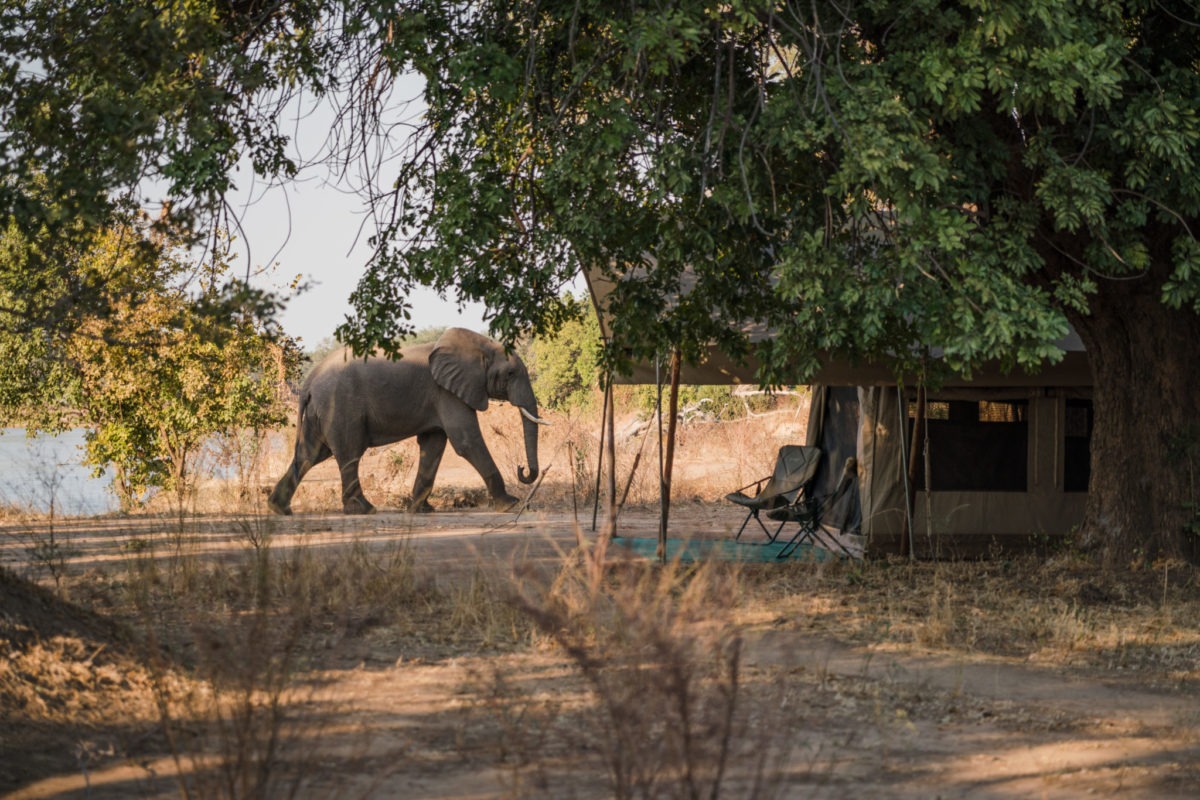
- Big-tusked bull elephants, including the famous Boswell, that stand on their hind legs to reach albida pods.
- Four permanent pools left by the shifting Zambezi, ringed by mahogany, ebony and sausage trees.
- Wild dog den on the floodplain during the dry season, which makes for exceptional sightings.
- Canoeing the Zambezi, mobile camping and Chitake Springs, all in one park.
Mana Pools is the park we send people to when they have already done the classic game-drive circuit and want something that feels genuinely wild. There are no fences, no manicured lawns and no guarantee of a sighting every drive. What you get instead is the freedom to walk, a river full of hippo and crocodile, and elephants that have grown up around guides on foot and behave accordingly. It is not for everyone. If you want certainty and a spa, go elsewhere. If you want to feel like a participant rather than a spectator, this is it.
Mana Pools National Park is a 2,196 km² UNESCO World Heritage Site on the Zambezi River in northern Zimbabwe. It is the one major African park where walking is the main event, not a side activity, and it is famous for relaxed bull elephants with enormous tusks that feed on albida pods right beside walking groups.

What is Mana Pools National Park?
Mana Pools is a 2,196 km² national park on the southern bank of the Zambezi River in northern Zimbabwe, about 2,600 km² short of the full UNESCO World Heritage property it belongs to. The name comes from the Shona word for four, after the four permanent pools the river left behind when it changed course. The park was established in 1963 and inscribed by UNESCO in 1984 as part of a 6,766 km² property that also includes the Sapi and Chewore Safari Areas.
Why is Mana Pools famous for walking safaris?
Mana Pools is the only major African park where walking is the primary way to see wildlife rather than an add-on. Low human population around the park means the animals are relaxed on foot, and guides walk daily, so the elephants in particular are habituated to people at close range. Walks run in the early morning and late afternoon, usually three to four hours, led by a licensed Zimbabwe Parks guide and armed ranger. You need to be reasonably fit and comfortable in the heat, but no technical experience is required.
When is the best time to visit Mana Pools?
June to October is the best time to visit, with August to October the peak for wildlife. As the floodplain dries, animals concentrate along the Zambezi and the remaining pools, and the bush thins out so sightings improve. May to July is cooler and greener with good general game viewing. Most camps close from November to April when the rains make the roads impassable, though a handful of operators run boat and photographic safaris in the green season.
| Period | Conditions | Wildlife | Verdict |
|---|---|---|---|
| May to July | Cool, dry, green fading to gold. 8 to 28°C | Good and building daily | Excellent for walking and canoeing |
| August to September | Hot and dry. 16 to 35°C | Peak concentrations at the river | Prime. Book months ahead |
| October | Very hot, 40°C plus | Maximum animals at remaining water | Extraordinary but punishing |
| November to April | Wet season. Roads flood | Wildlife disperses, birds arrive | Most camps closed |
What wildlife will I see?
Elephant, buffalo, lion, leopard and wild dog are all present, along with zebra, impala, kudu, eland and waterbuck. The park is best known for its bull elephants, which return to the same areas each year and are comfortable with walking groups. Wild dog den on the floodplain during the dry season, which gives unusually reliable sightings. Birdlife is strong year round, with over 350 species recorded, and the green season brings migratory species through.
What activities are available?
Walking safaris are the headline. Canoe safaris run down the Zambezi, usually three to five days, camping on islands and riverbanks. Game drives operate in the park and along the river frontage. Mobile camping trips move between campsites and are the most immersive way to see the park. Fishing is permitted on a catch-and-release basis in season. Chitake Springs, in the south of the park, is a separate and much more serious walk, with dense predator activity around a single water source, and it is only suitable for experienced travellers who are comfortable on foot in close quarters.
How do you get to Mana Pools?
Almost everyone flies in. Light aircraft connect Mana Pools to Harare, Kariba and Victoria Falls, with airstrips at the main camps. Self-driving is possible in a well-equipped 4×4 via Kariba or Harare, but the roads are rough, the park is seasonal and you need to be self-sufficient. There is no scheduled road transfer. Most travellers combine Mana Pools with Hwange, Victoria Falls or a few nights in the Cape, and we usually build it as a three to four night stay.
Is Mana Pools right for you?
It suits travellers who have safaried before and want something more active and less predictable. It does not suit anyone who needs air conditioning, a spa, or a guaranteed sighting every drive. Children are generally welcome from around 12 on walking activities, and younger on drives, depending on the camp. If you are unsure, tell us what you have done before and we will be honest about whether this is the right fit.
| jan | feb | mar | apr | may | jun | jul | aug | sep | oct | nov | dec |
 | | | |  | |  | | | | | |
= Best
= Good
= Mixed


Safaris
Mana Pools




Places to stay
Related Accommodation


Ready for an adventure? Lets Talk!
Contact SAFARI FRANK to get started on your safari of a lifetime!