Post Last updated on September 17, 2026
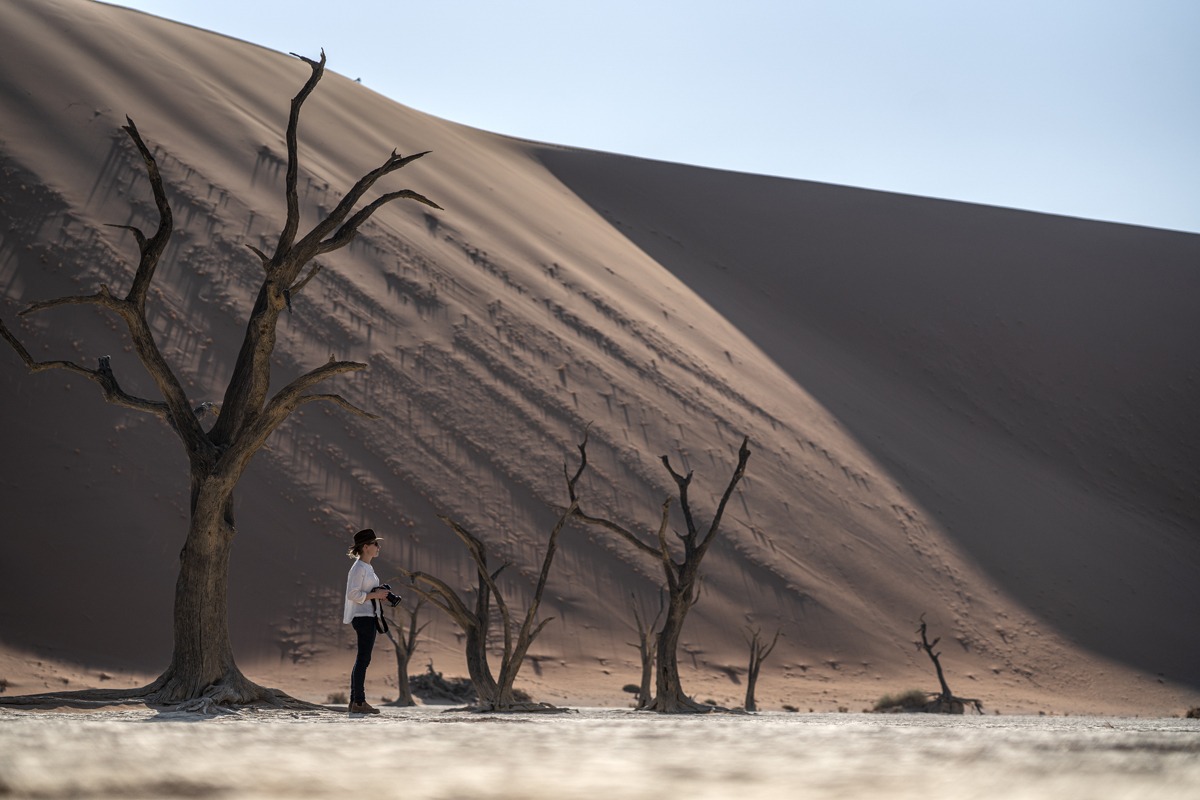
Ask three guides to name the best luxury lodge in Namibia and you will get three different answers, and all three will be right. Namibia is not a country with one flagship camp. It is a country of regions that do completely different jobs: a dune sea the age of the dinosaurs, a rhino wilderness bigger than some countries, a salt-pan park where every waterhole is a stage, and a coast so remote that the lodges are the only signs of us for a hundred kilometres.
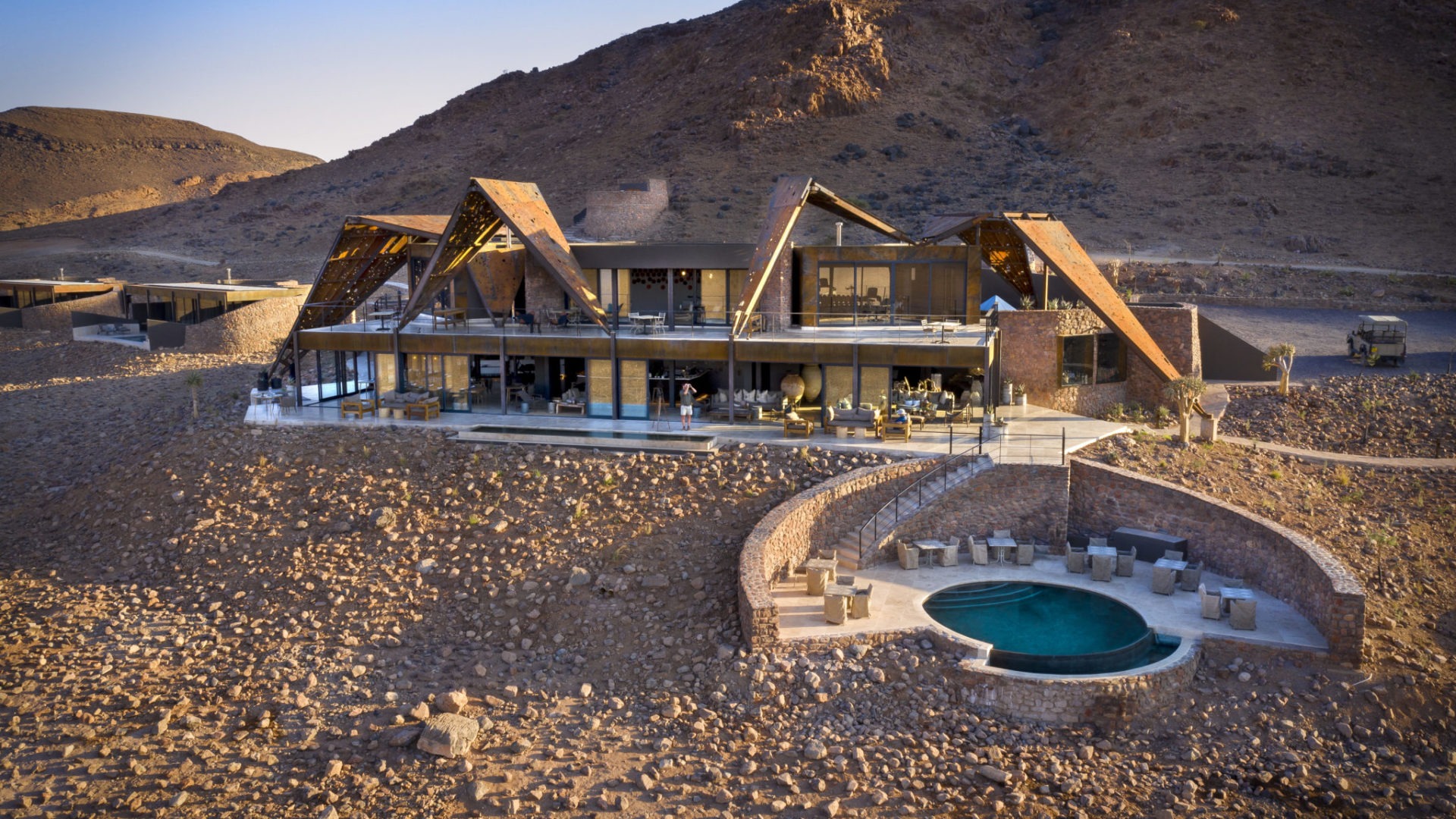
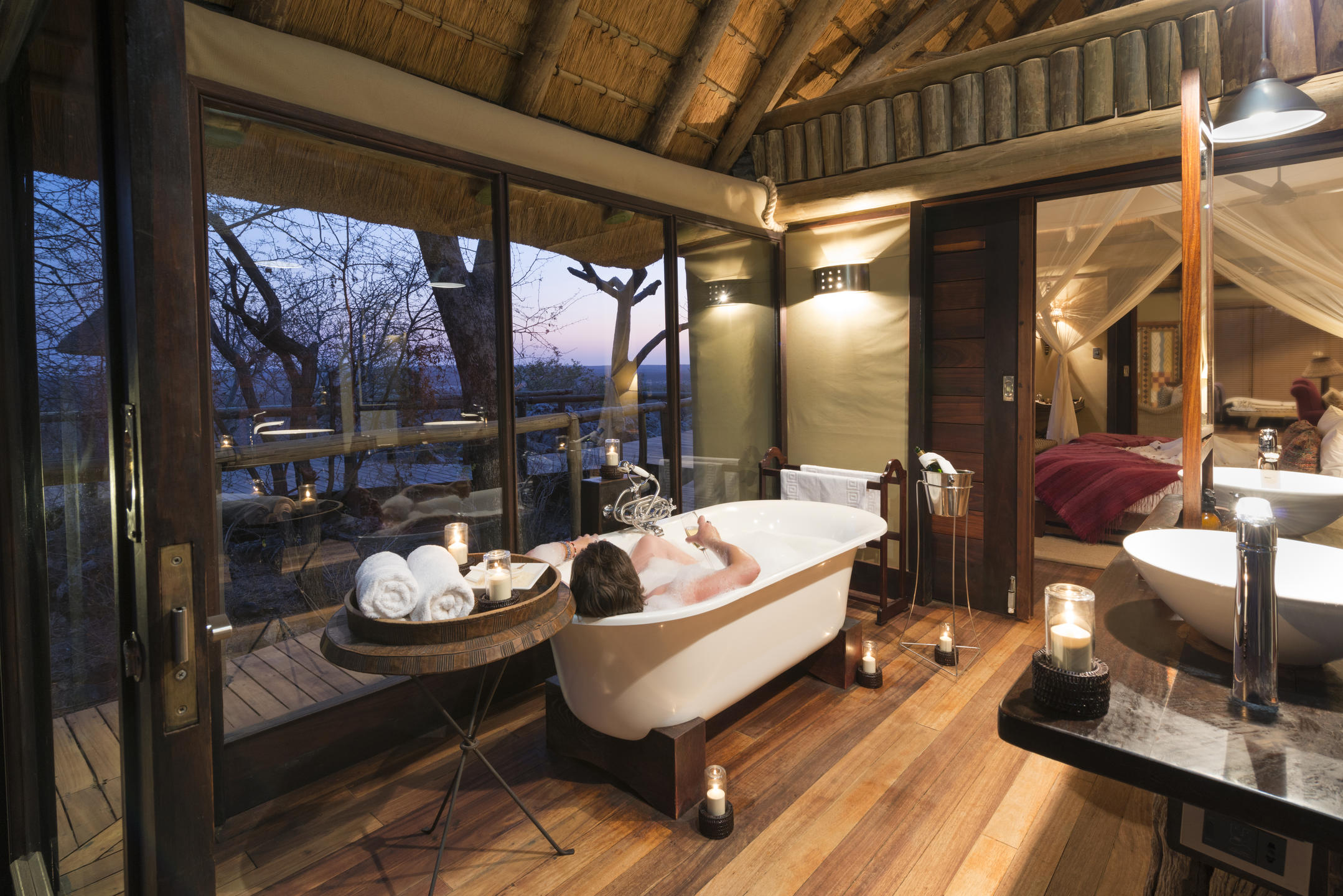
The best luxury lodges in Namibia are the ones that match the region you are travelling for: Horizon by Ongava for the most private Etosha stay, Desert Rhino Camp for rhino on foot in the Kunene conservancies, andBeyond Sossusvlei Desert Lodge for polished desert luxury, and Shipwreck Lodge for the raw edge of the Skeleton Coast. So the honest question is not “which lodge is best”. It is “which lodge fits the trip you are actually designing”. That is the question this guide answers. I will walk you through the lodges we book, region by region, with the trade-offs we weigh when we plan a Namibia safari: what each place is genuinely like, roughly what it costs, and who each one is wrong for.
If the desert is the trip, not just a stop, we keep a separate guide to Namibia’s luxury desert lodges. This page is the country-wide chooser.
One thing worth understanding before the list, because it explains why Namibia feels the way it does: privacy here is not an accident of wealth, it is a national design. Namibia is one of the least densely populated countries on Earth, and since 1996 its communities have held the rights to manage the wildlife on their own land. There are now 86 communal conservancies covering close to 20 percent of the country, and nearly half of Namibia, 46.8 percent, sits under some form of conservation management (NACSO). When you stay in a private reserve here, your bed-night funds that system. It is the reason you can watch black rhino on foot in a landscape where rhino numbers have grown over the long term thanks to the conservancy system.
The lodges at a glance
Rates below are indicative 2027 high-season bands, per person sharing, in Namibian dollars. They move with season and room type. Use them to compare lodges, not as a quote.
| Lodge | Region | Best for | Nightly rate band (2027) | Getting there |
|---|---|---|---|---|
| andBeyond Sossusvlei Desert Lodge | Sossusvlei | Dunes in comfort, stargazing | NAD 22,000 – 40,000 pp | Fly-in or road |
| Kwessi Dunes | NamibRand | Desert quiet, dark skies | NAD 12,000 – 23,000 pp | Fly-in or road |
| Dead Valley Lodge | Sesriem, Namib-Naukluft | Being first through the park gate | NAD 4,000 – 6,000 pp | Road |
| Mowani Mountain Camp | Damaraland | Twyfelfontein, granite landscapes | NAD 6,000 – 15,000 pp | Road or fly-in |
| Onduli Ridge | Damaraland | Space, design, Brandberg views | NAD 15,000 – 20,000 pp | Road (guided or self) |
| Desert Rhino Camp | Kunene conservancies | Tracking rhino on foot | NAD 13,000 – 21,000 pp | Fly-in |
| Ongava Lodge | Etosha boundary | Game density at a gentler rate | NAD 14,000 – 20,000 pp | Road or fly-in |
| Horizon by Ongava | Etosha private reserve | The most private Etosha experience | NAD 52,000 pp | Fly-in |
| Shipwreck Lodge | Skeleton Coast | Raw remoteness, done properly | NAD 19,000 – 33,000 pp | Fly-in |
| Hoanib Skeleton Coast Camp | Kaokoland | Desert-meets-coast wilderness | NAD 22,000 – 37,000 pp | Fly-in |
There is no single best lodge here because regions do different jobs. The desert regions give you space, silence and skies. The Etosha private reserves give you concentrated wildlife. The far north-west gives you the wildest days you will ever spend on safari. Most trips we design combine two or three of these.
Sossusvlei and NamibRand: dunes and dark skies
No photograph quite prepares you for Sossusvlei: red dunes standing over white clay pans, with almost nothing else moving. The neighbouring NamibRand Nature Reserve is Africa’s first Gold-Tier International Dark Sky Reserve. If you have never seen the southern sky properly, this is where you should see it.
andBeyond Sossusvlei Desert Lodge
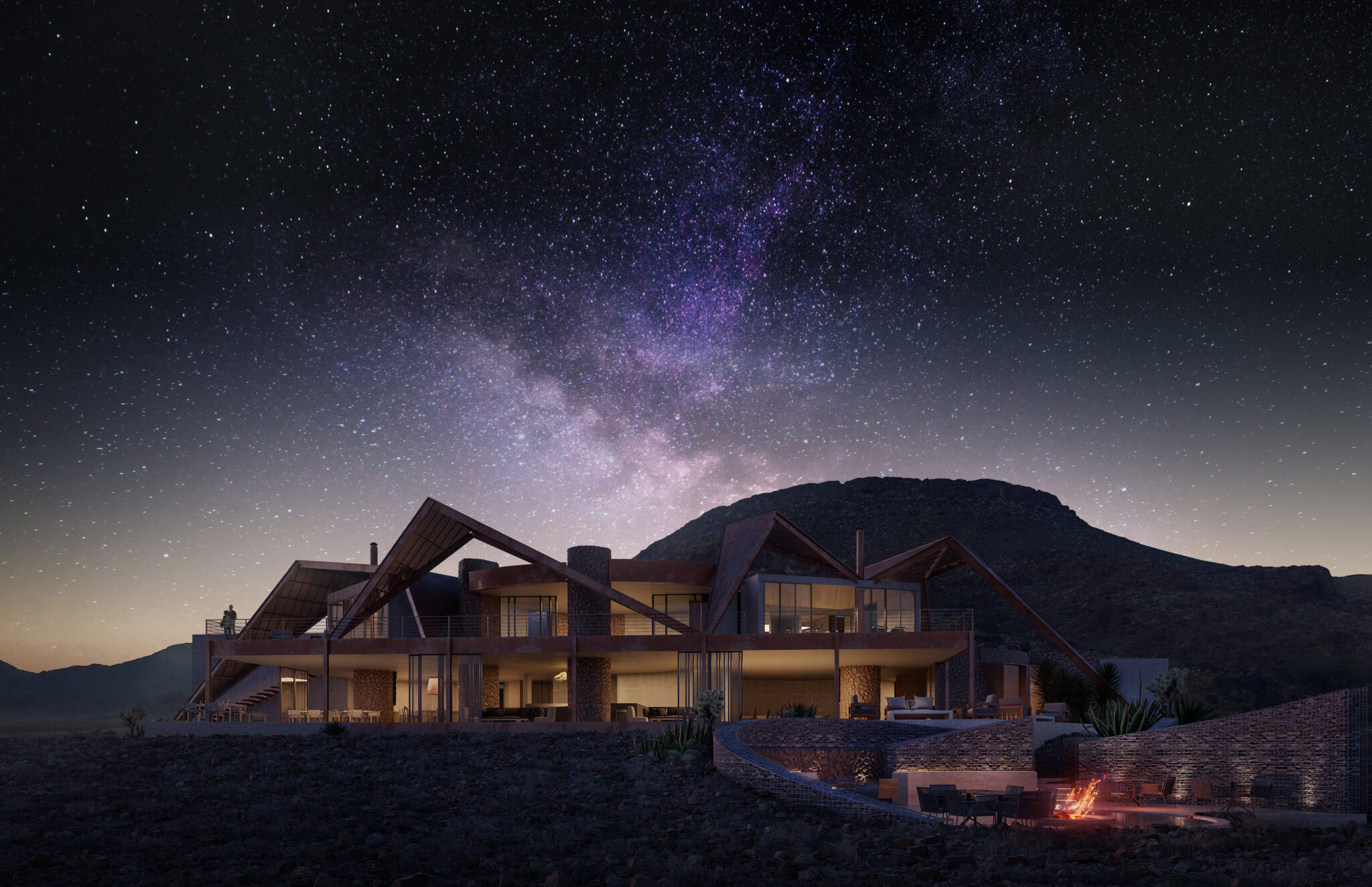
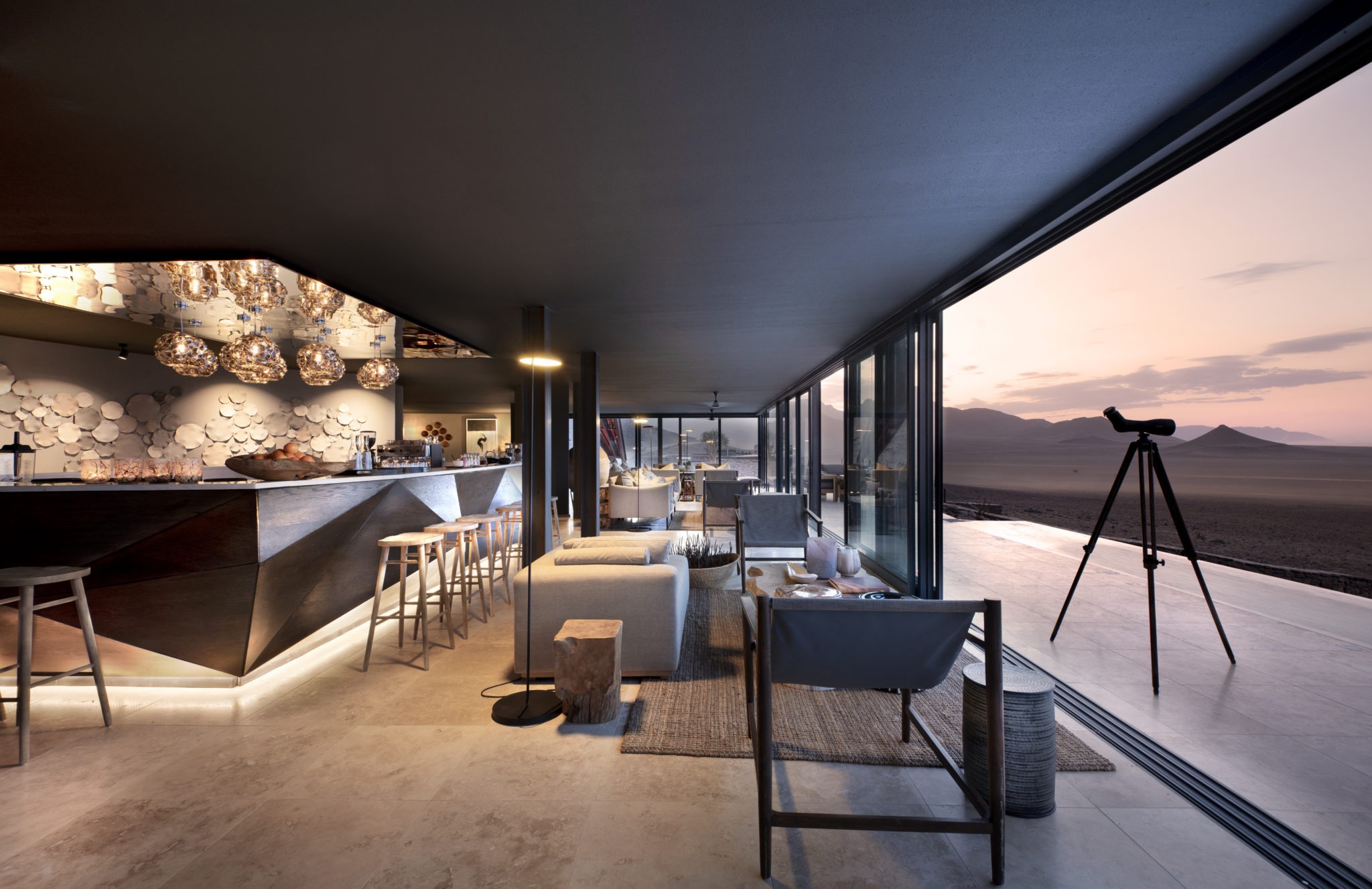
The polished end of the desert. Ten suites plus one family Star Dune Suite, glass-fronted toward the dunes, each with a private plunge pool and skylights for stargazing from bed. There is an observatory, and evening stargazing sessions when it is in use. Best if you want the icon without giving up five-star comfort. Skip it if you want to feel like a pioneer rather than a guest of a global brand.
Kwessi Dunes
Twelve chalets on a private NamibRand concession, each with an open-air stargazer room: a decked space under the stars rather than under a roof. It trades some of Sossusvlei Desert Lodge’s polish for more reserve, and more quiet.


Dead Valley Lodge
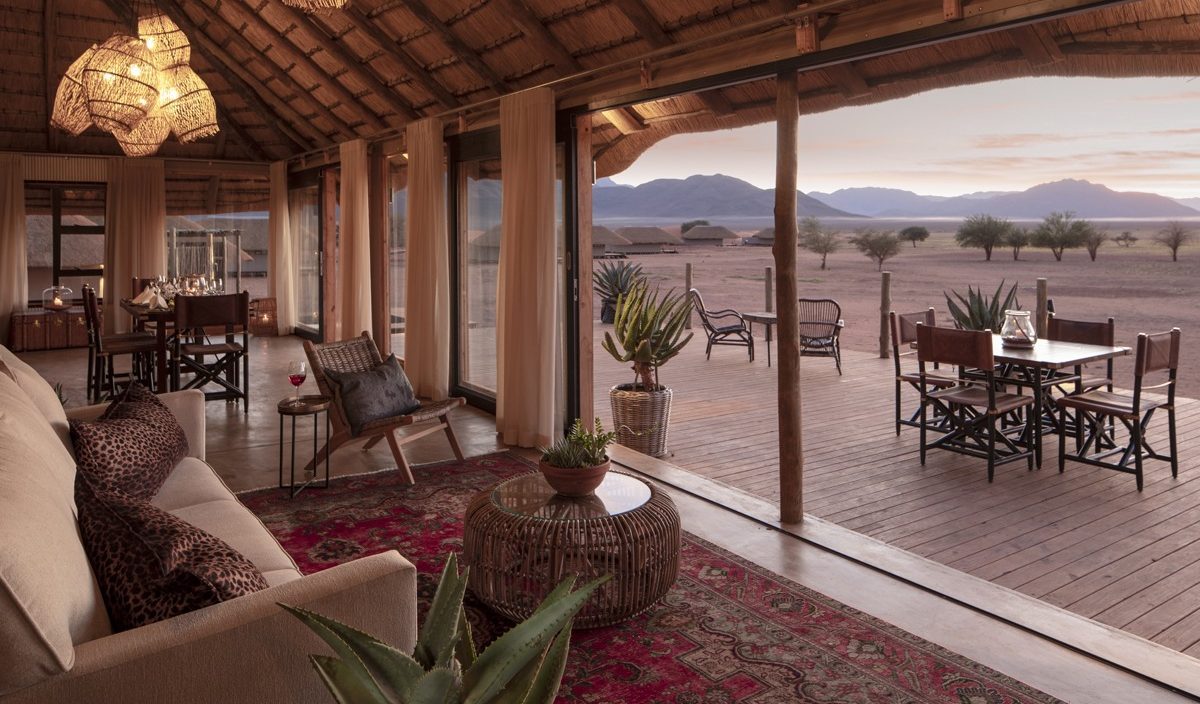
The sleeper pick of the region. It sits inside Namib-Naukluft National Park at Sesriem, one of only two lodges inside the park, so you are through the gate before the day visitors arriving from outside. Choose it for first light on the dunes, not for lodge grandeur.
We also weigh Little Kulala and Camp Sossus. For ballooning, park-gate timing, heat, and which desert camp to book for how many nights, use the desert lodges guide.
Damaraland and the Kunene: tracking desert giants
North of the Ugab River the country changes into gravel plains and granite piles, and the wildlife becomes the story. Desert-adapted elephants move between dry riverbeds. Giraffe and oryx cross open plains. In the hills of Damaraland you find Twyfelfontein, a UNESCO World Heritage site since 2007, with one of the largest concentrations of rock engravings in Africa. This is also the land of the free-ranging black rhino. The Kunene and Erongo conservancies hold the only black rhino population of its kind living on communal land, monitored by Save the Rhino Trust.
Mowani Mountain Camp
Tented suites among granite outcrops near Twyfelfontein. A practical base for drive-in safaris, close enough to the main road that arrival and departure stay simple. Ideal if you want Damaraland’s landscapes and rock art without a fly-in.
Onduli Ridge
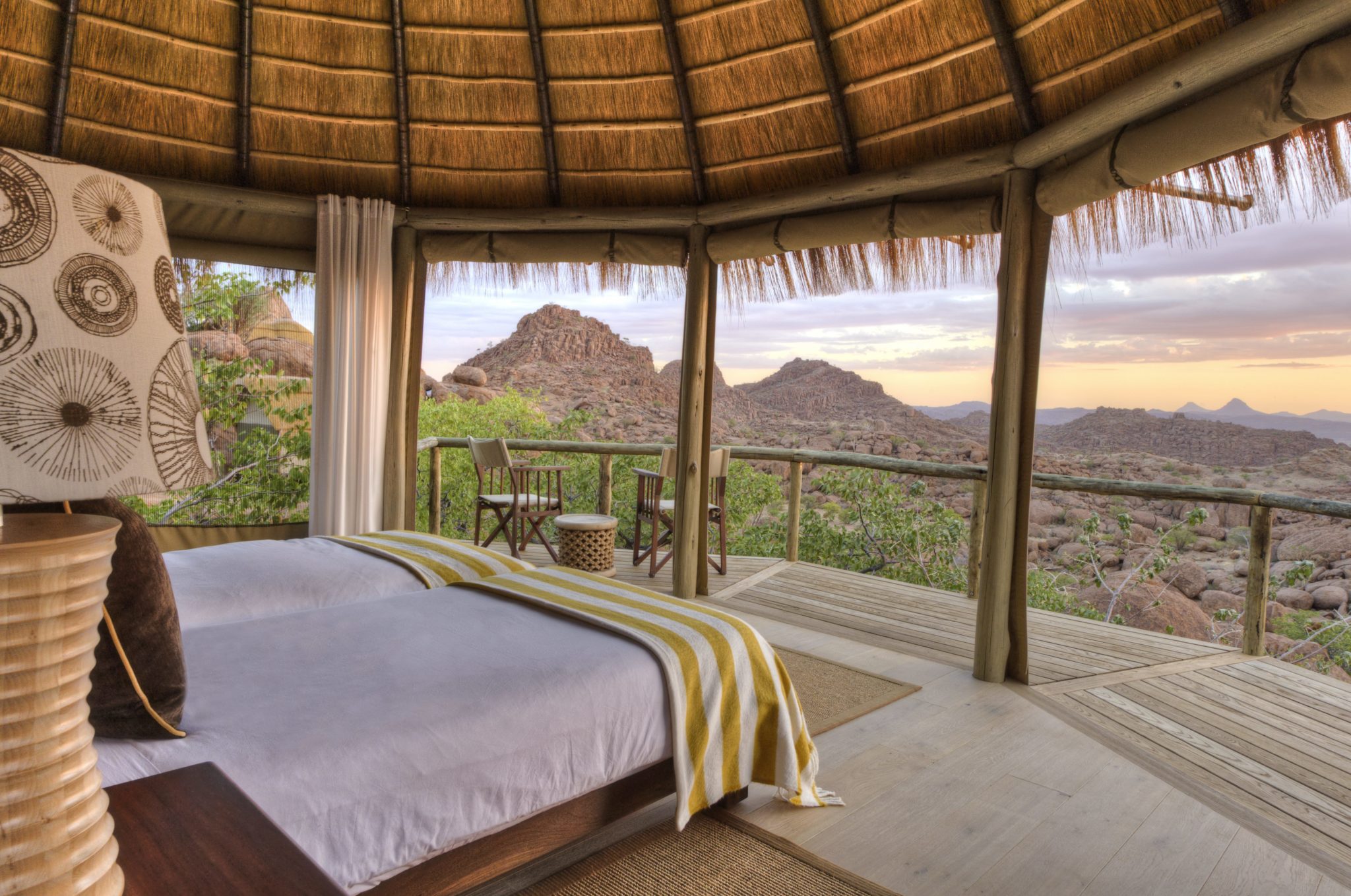
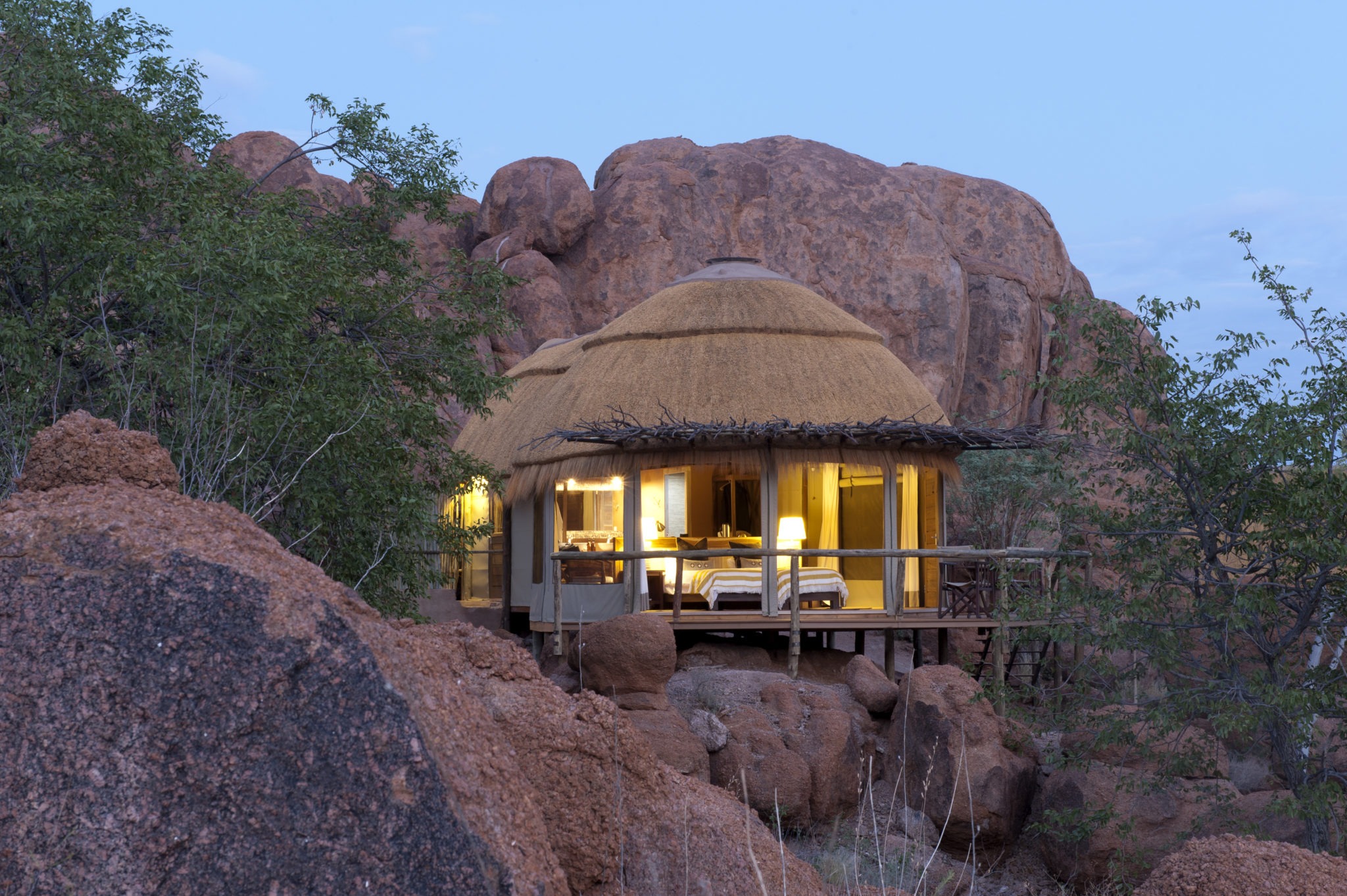
A boutique, fully solar-powered eco-lodge built into the granite, with views toward the Brandberg and sleep-out beds for the nights you will want to sleep outside. We use it in guided road-based itineraries. It anchored the Damaraland leg of the trip in the cost section below.


Desert Rhino Camp
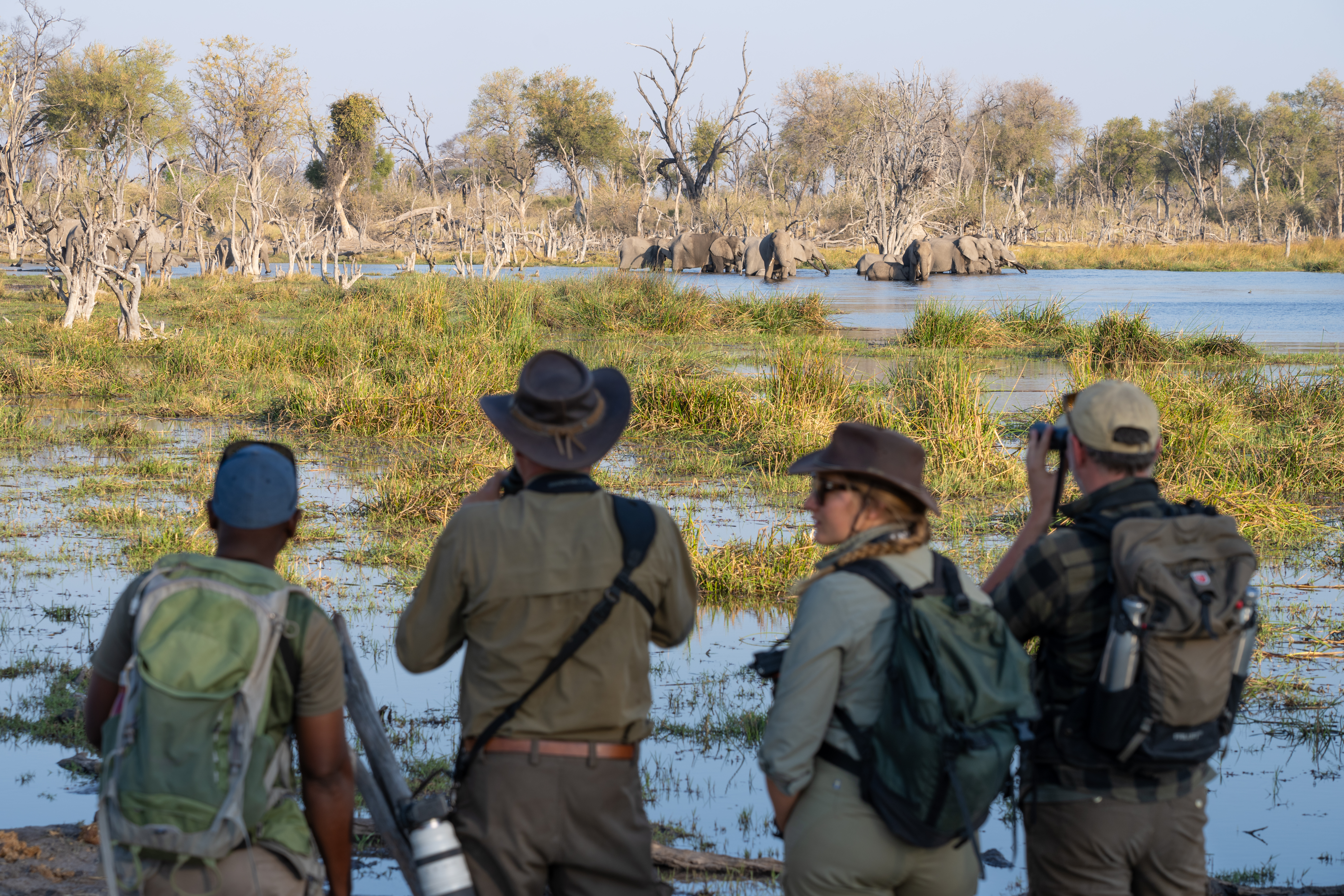
The most purposeful camp on this list. Run by Wilderness in a long partnership with the community conservancies and Save the Rhino Trust, it exists to protect free-ranging black rhino. Guests go out with trackers to find rhino on foot, in a landscape almost nobody visits. This is not a Big Five tick-box camp. It is a working conservation landscape. If your idea of luxury is a checklist, this is the wrong camp. If it is positive impact, it may be the right one.

Etosha and the private reserves on its boundary
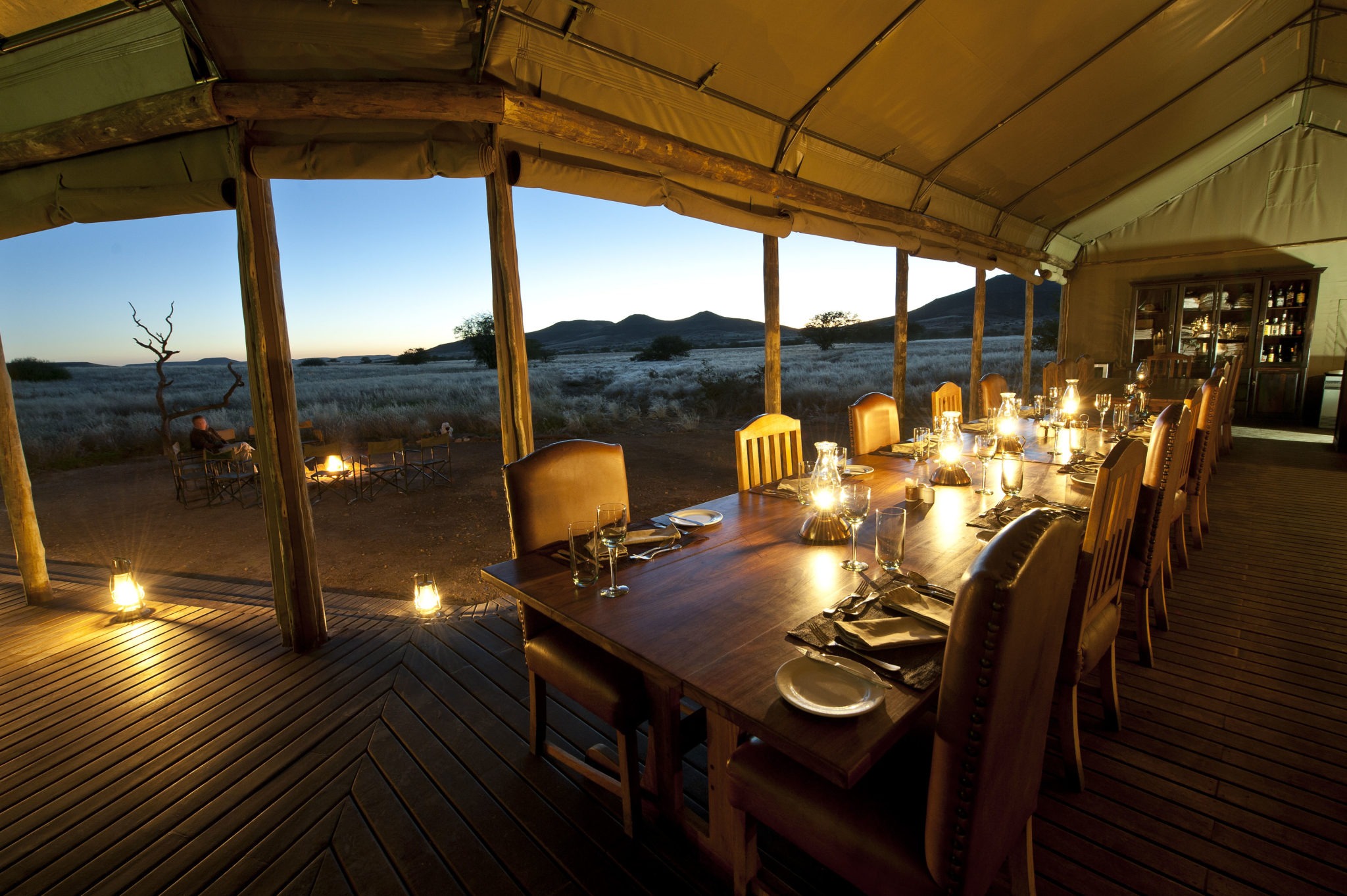
Etosha itself is a national park: self-drive friendly, waterhole-rich, and busy at peak. The private reserves along its southern edge are where our guests usually stay, because they add what the park cannot: night drives, off-road tracking and walking, and camps sized for a handful of guests rather than hundreds.
Ongava Lodge
The pragmatic luxury choice on the Ongava Reserve, which borders Etosha directly. You get the reserve’s own game, including rhino, plus easy access into Etosha’s waterhole circuit. This is the lodge we use when we want Etosha wildlife without paying for total privacy.


Horizon by Ongava
Formerly Little Ongava. Three villas, each with a private plunge pool and outdoor shower looking over a waterhole, and the detail that matters most: a private guide and vehicle for your stay, on a reserve adjacent to Etosha. For travellers who want the Etosha ecosystem without the Etosha crowds, this is the top end. Skip it if you are travelling solo or on a smaller budget. The exclusivity is priced in.

On Etosha’s eastern boundary, Onguma is the other private-reserve option we use: Onguma The Fort, Camp Kala, and the smaller tented and bush camps, depending on budget and the feel you want.
The Skeleton Coast and Kaokoland: the wildest line on the map
Namibia’s far northwest is where the trip stops being a holiday and becomes a story you tell for the rest of your life, and we use that sentence carefully. These camps are fly-in, slow to reach, and wrong for a first short safari. They are right when you have already done the classics, or when remoteness is the point. See our Skeleton Coast flying safari if that is the shape of trip you want.
Shipwreck Lodge
Built to echo the wrecks that gave the coast its name, with 4×4 excursions to the clay castles and seal colonies. Desert-adapted lions and brown hyenas are possible here, never promised. Sightings depend on the concession and the season.


Hoanib Skeleton Coast Camp
A Wilderness camp at the seam between inland desert and coast, reached by light aircraft, with excursions that cross into Skeleton Coast National Park. We also consider Serra Cafema on the Kunene River for travellers going all the way to the far northwest.
Guided road-based or fly-in: how to choose
This is the first decision in Namibia, and it matters more than which lodge you pick. Namibia’s distances are enormous. Driving Windhoek to Sossusvlei takes five to six hours, longer than the map suggests, and the reach to Damaraland or Kaokoland doubles it. You have three workable styles.
Guided road-based. A private guide and vehicle travel with you, camp to camp. You get the interpretation of a guide who knows where the road hides its best, and you never think about directions, distances or fuel. This is the style of the worked example below. For first-time visitors who want depth without logistics, it is the version we recommend most. See our private safari tours in Namibia.
Self-drive. Namibia is Africa’s great self-drive country: graded roads, left-hand driving, fuel stops you can plan around, and lodges that know how to receive independent travellers. The trade-offs are real: gravel-road corrugation, 4×4 requirements on Kaokoland and Damaraland tracks, fuel-range planning, and permits for Skeleton Coast National Park. We cover this in our expert guide to self-drive safaris in Namibia.
Fly-in. Light-aircraft hops between desert and coast. The fastest way to add the far northwest, and the only practical option for camps like Shipwreck or Desert Rhino. Cost per leg is significant. So is the time you buy back.
What a luxury Namibia safari really costs
The honest answer: it depends on how you travel, and Namibia rewards tailoring more than almost any safari country. So instead of a generic price table, here is a real quote we issued recently, shared as an anonymised example and rounded only for readability. Take it as an anchor for the top of the range, not as the answer to what a Namibia safari costs.
A recent high-end example. A guided, road-based safari combining Cape Town with Namibia’s highlights, travelling in September, came to N$265,720 per person sharing, based on two travellers. That is roughly fourteen nights: three at the Victoria & Alfred Hotel in Cape Town, one at Galton House in Windhoek, two at Okonjima Plains Camp with its carnivore conservation work, two at Etosha Oberland on Etosha’s southern boundary, two at Onduli Ridge in Damaraland, two at The Delight in Swakopmund, and two at Kwessi Dunes in the NamibRand, with a private guide and private vehicle for the Namibia leg throughout.
Two things we want to be unmistakably clear about. First: this is a high-end trip, built around a private guide and vehicle, priced per person sharing, and it sits at the top of the range rather than in the middle of it. Second: every safari we make is tailor-made, so the same route can be scaled down (smaller lodges, shared guiding, a shorter tail) or up (fly-in extensions, the most remote camps on this list). This number is one real example, not a price list. If you want to see how we shape the long version of this country, look at our 17-night luxury Namibia safari or our 20 Night Photographic Namibian Adventure.
What drives the price up or down, in our experience:
- Guiding model. A private guide and vehicle for the whole route is the single biggest quality lever, and a real cost line. Self-driving trades that for independence.
- Camps chosen. The difference between a solid Etosha-edge lodge and Horizon, or the top end of Sossusvlei, can be a factor of two or more per night.
- Regions added. Every Skeleton Coast or Kaokoland leg adds light-aircraft seats. Fly-in camps price accordingly.
- Season. Peak-month pricing applies around the dry winter months. Shoulder seasons stretch the same budget further.
When to go
Namibia works year-round, but regions reward different months. Etosha is at its sharpest in the dry winter, roughly May to October, when animals crowd the waterholes and the bush thins out. The desert regions are more year-round, though summer brings real heat and winter nights get genuinely cold. Expect crisp mornings any month you travel. The green months bring thundershowers and a softer palette to the desert.
Which lodge is right for you
- You want the icon, done in comfort: andBeyond Sossusvlei Desert Lodge. Skip it if you want to feel like a pioneer. Kwessi Dunes or Dead Valley Lodge will suit you better. For the full desert case, use the desert lodges guide.
- You care most about the night sky: Kwessi Dunes, with its open-air stargazer rooms, in Africa’s first Gold-Tier Dark Sky Reserve.
- You want maximum wildlife for the money: Ongava Lodge, on a private reserve with Etosha access.
- You want the most private game experience in the country: Horizon by Ongava. Three villas, private guide and vehicle. Skip it if you are travelling solo or on a smaller budget.
- You care about conservation more than comfort theatre: Desert Rhino Camp. Skip it if you need a guaranteed Big Five checklist.
- You have done the classics and want the edge of the map: Shipwreck Lodge or Hoanib Skeleton Coast Camp, fly-in only. Skip them on a first safari or a short trip. Remoteness here has a time cost.
- You want landscape and culture with your wildlife: Mowani Mountain Camp or Onduli Ridge in Damaraland, where the rock engravings and desert-adapted wildlife share the stage.
Questions travellers actually ask us
What is the single best luxury lodge in Namibia?
There isn’t one, because Namibia’s regions do different jobs. Our honest framing: Horizon by Ongava for the most private game experience, Desert Rhino Camp for conservation you can feel under your boots, Sossusvlei Desert Lodge for polished desert luxury, Shipwreck for raw remoteness. The right answer is the trip shape, not the single camp.
How much does a luxury Namibia safari cost?
Expect a high-end guided road trip with Cape Town to run near N$265,000 per person sharing for about two weeks, as in the worked example above. Tailor-made safaris can be scaled up or down from there. Fly-in circuits that include the most remote camps price higher.
Should I self-drive or fly-in in Namibia?
Decide this before you pick a lodge. Guided road-based trips balance comfort and immersion. Self-drive rewards confident travellers who accept gravel-road realities. Fly-in buys time where distances would otherwise eat days.
When is the best time for a luxury Namibia safari?
The dry winter months, roughly May to October, are the strongest overall window, especially for Etosha’s waterholes. Desert regions travel well year-round if you plan around summer heat and cold winter nights.
How many days do you need for a luxury Namibia safari?
Ten to fourteen days is the sweet spot for a circuit that combines the desert, Damaraland and Etosha without rushing. Shorter trips work best built around one or two regions rather than the whole country.
Is Namibia a good honeymoon destination?
Yes, if you want space and privacy over density of game. Desert lodges with private plunge pools, star-beds and fly-in access make it a strong choice for couples who value silence.
Will I see the Big Five in Namibia?
Not reliably, and that is the wrong reason to come. Etosha and the Ongava reserve offer rhino, lion and elephant, but Namibia’s signature experiences are rarer: free-ranging black rhino tracked on foot, desert-adapted elephants, and a coastline almost nobody else will ever see.
Plan your Namibia safari with SAFARI FRANK
If you already know the shape of the trip, we can build it. If you do not, that is the useful conversation: which regions, which lodges, and whether the desert, Etosha or the far northwest should do the heavy lifting.
Start planning your Namibia safari, or get in touch and we will shape it around how you actually want to travel.